



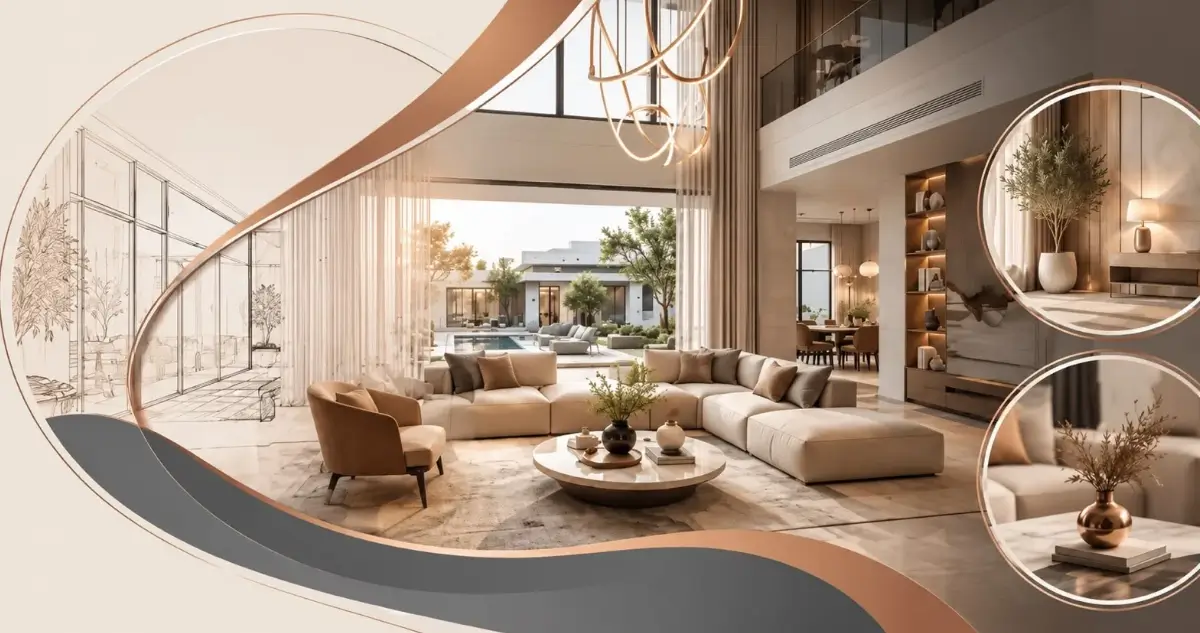
Villa interior design in Abu Dhabi and Dubai requires more than selecting luxury finishes or furnishing large spaces. Effective interior design for villas should connect architecture, functionality, and lifestyle so that each area serves a clear purpose while maintaining a cohesive design throughout the home.
Unlike apartments, villas often include larger floor plans, multiple living zones, high ceilings, private areas, and stronger connections to outdoor spaces. Planning circulation, lighting, storage, materials, and furniture layouts from the beginning helps create interiors that feel connected, practical, and comfortable for everyday living.
This guide covers the key principles of villa interior design, including space planning, popular design styles, materials, lighting, common mistakes, and the factors to consider when choosing an interior design company in Dubai or Abu Dhabi.
Why Is Villa Interior Design Different from Other Residential Projects?
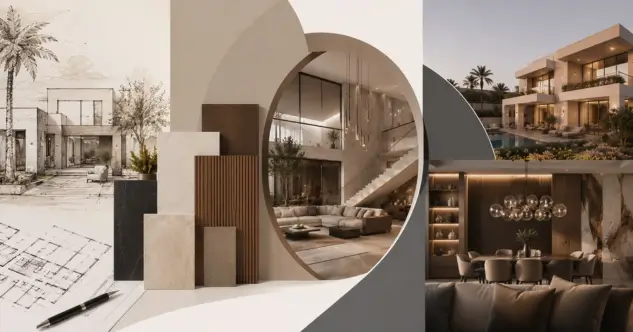
Villa interior design requires a different approach from other residential projects because villas typically offer larger layouts, multiple living zones, and greater flexibility. Successful design focuses on space planning, circulation, natural light, privacy, and personalized solutions that support how the home is used.
Several factors make villa interior design unique:
1-Larger and More Flexible Spaces:
Villas provide more space and greater flexibility than most residential properties, but each area still needs a clear purpose and connection to the rest of the home.
Well-planned villas may include:
- Formal and informal living rooms.
- Dining areas for everyday use and entertaining guests.
- Private family lounges.
- Home offices or study rooms.
- Entertainment spaces or multipurpose rooms.
These areas should function independently while maintaining a consistent design direction across the property.
2-Multiple Living Zones Require Better Space Planning
Villas often separate family, guest, entertainment, and private areas. Effective zoning helps organize these spaces while maintaining privacy and comfortable movement throughout the home.
Good zoning can improve:
- Privacy for family members.
- Circulation between rooms.
- daily routines.
- Organization across large floor plans.
3-A Strong Connection Between Indoor and Outdoor Living
The relationship between indoor and outdoor spaces is an important part of villa interior and exterior design. Large windows, sliding doors, terraces, gardens, courtyards, and pools can become part of one connected design concept.
Designers can strengthen this connection by:
- Maximizing natural daylight.
- Coordinating materials and color palettes.
- Extending living areas toward terraces and gardens.
- Positioning furniture to make better use of exterior views.
This connection enhances both the visual appeal and everyday living experience.
4-Long-Term Planning From the Beginning
Villa projects benefit from planning layouts, lighting, storage, materials, and future requirements before major furniture and finish decisions begin.
This approach can:
- Reduce costly changes during construction.
- Improve space efficiency.
- Maintain consistency across the property.
- Support future upgrades and renovations.
5-Greater Opportunities for Customization
Villas offer more opportunities for personalized solutions that respond to the homeowner’s lifestyle, preferences, and functional requirements. Custom interior design for villas may include:
- Built-in storage solutions.
- Custom-designed kitchens and wardrobes.
- Feature walls and architectural details.
- Tailor-made furniture.
- Unique material combinations and finishes.
Key Principles of Successful Villa Interior Design
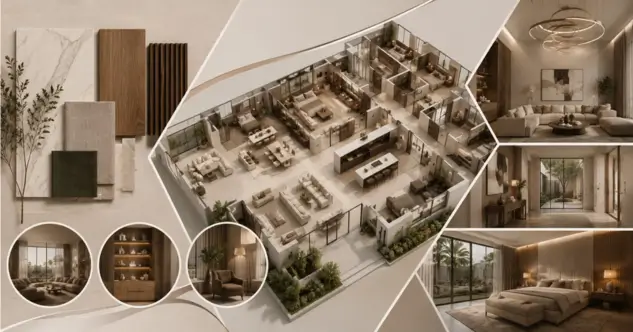
Demand for professional interior design continues to grow across the UAE. According to a Mordor Intelligence report available through Research and Markets, the UAE interior design market is expected to grow from USD 1.94 billion in 2026 to USD 3.11 billion by 2031, at a CAGR of 9.83%.
Successful villa interior design combines space planning, lighting, materials, proportion, and lifestyle requirements to create a home that works well as a complete living environment.
The following principles form the foundation of a well-designed villa:
1.Start With Clear Space Planning
Space planning determines how each part of the villa will function and how people will move between different areas. Before selecting furniture or finishes, designers should define the purpose of every room, identify circulation routes, and separate public, private, and service zones.
Effective space planning helps prevent oversized rooms from feeling empty and ensures that furniture arrangements support movement rather than obstruct it.
2.Create a Consistent Design Language
A villa may include many rooms, floors, and functional areas, but the design should still feel connected. Consistency does not mean repeating the same furniture or colors throughout the property. Instead, designers create visual relationships through coordinated materials, proportions, finishes, and architectural details.
In modern villa interior design, for example, the same wood, stone, metal finish, or color palette can appear in different forms throughout the property to create continuity without making every room look identical.
3.Balance Luxury with Everyday Functionality
Luxury should improve the living experience rather than make the home difficult to use. A successful design considers storage, maintenance, seating comfort, lighting, and accessibility alongside visual quality.
Practical choices may include:
- Durable flooring in high-traffic areas.
- Concealed storage in living spaces.
- Easy-to-maintain finishes in kitchens and bathrooms.
- Comfortable furniture proportions.
- Clear circulation around large pieces.
4.Use Proportion and Scale Carefully
Large rooms require furniture and decorative elements that suit their dimensions. Small pieces can appear disconnected in a spacious villa, while oversized items may restrict movement and affect visual balance.
Designers should consider ceiling height, wall width, window size, and room volume when selecting furniture, lighting fixtures, artwork, and architectural features.
5.Plan Lighting in Layers
Lighting should support different activities and moods throughout the day. Villa interiors benefit from a layered lighting plan that combines:
- Ambient lighting for general illumination.
- Task lighting for reading, cooking, or working.
- Accent lighting for artwork and architectural details.
- Decorative lighting that contributes to the design identity.
Natural light should also influence furniture placement, curtains, and material choices during the planning stage.
For a broader overview of residential and commercial interiors, explore our Interior Design Dubai & Abu Dhabi: A Complete Guide to Luxury Interiors and Design Services.
6.Prioritize Material Quality and Suitability
Materials should be selected according to where and how they will be used. A finish that works well in a formal lounge may not be suitable for a kitchen, bathroom, or family area.
Successful material selection considers:
- Durability.
- Maintenance requirements.
- Resistance to moisture and heat.
- Comfort and texture.
- Compatibility with the overall design concept.
7.Design Around the Homeowner’s Lifestyle
A villa should reflect how its residents live, entertain, work, and relax. Designers should understand family routines, privacy needs, storage requirements, and preferred activities before developing the final layout.
A family that frequently hosts guests may need separate formal and informal reception areas. A household with children may prioritize flexible family spaces and durable finishes, while others may need a home office, private gym, prayer room, or entertainment area.
Customization allows the villa to respond to real needs instead of following a generic design template.
Popular Villa Interior Design Styles
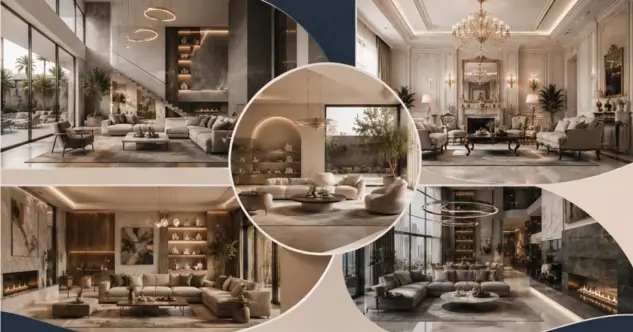
The right interior design style defines your villa’s overall character. Choose a style that matches the architecture, fits your lifestyle, and remains timeless rather than simply following design trends.
Below are some of the most popular villa interior design styles:
-
Modern Villa Interior Design
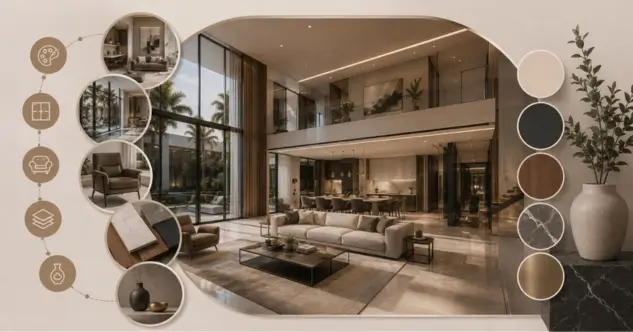
Modern interiors focus on simplicity, clean lines, and functional layouts. This style emphasizes open spaces, uncluttered environments, and carefully selected materials instead of excessive decoration.
Key characteristics include:
- Neutral color palettes with bold accent colors.
- Large windows that maximize natural light.
- Sleek furniture with simple geometric forms.
- Glass, metal, wood, and natural stone finishes.
- Minimal decorative accessories.
-
Contemporary Villa Interior Design
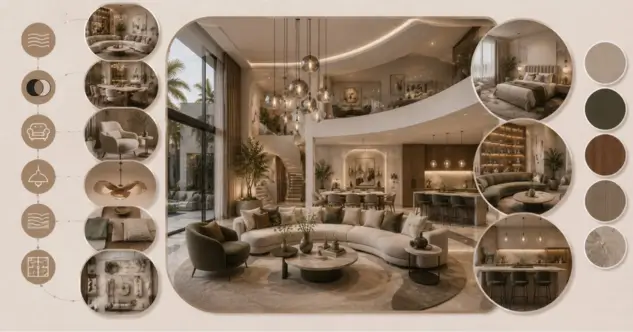
Although often confused with modern design, contemporary interiors evolve with current design trends while maintaining a refined appearance. They combine comfort, flexibility, and modern materials with softer shapes and layered textures.
Common features include:
- A balanced mix of straight and curved lines.
- Warm neutral tones with subtle contrasts.
- Statement lighting fixtures.
- Layered textures and premium materials.
- Open layouts with flexible living spaces.
-
Minimalist Villa Interior Design
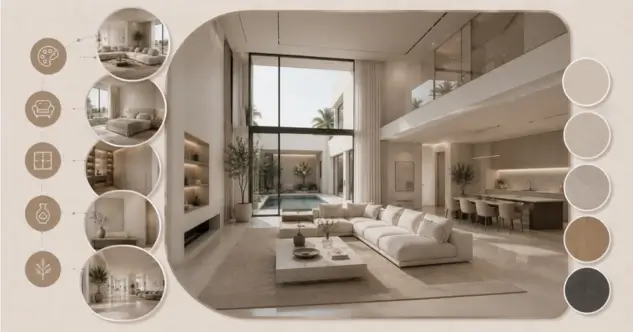
Minimalist design follows the principle that every element should have a clear purpose. Instead of filling rooms with decorative pieces, it focuses on spacious layouts, clean surfaces, and carefully selected furnishings.
Minimalist villas typically feature:
- Limited color palettes.
- Simple furniture with clean silhouettes.
- Hidden storage solutions.
- Minimal decorative accessories.
- Open and uncluttered interiors.
-
Classic Villa Interior Design
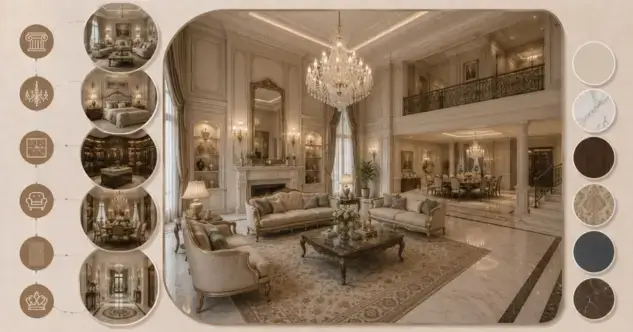
Classic interiors are inspired by timeless European architecture and traditional craftsmanship. They emphasize symmetry, elegant proportions, and luxurious materials that never go out of style.
Typical characteristics include:
- Decorative moldings and ceiling details.
- Marble flooring and natural wood finishes.
- Chandeliers and statement lighting.
- Rich fabrics and upholstered furniture.
- Balanced layouts with formal living spaces.
-
Luxury Contemporary Villa Design
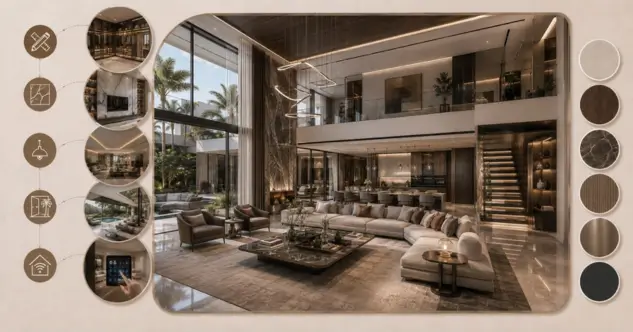
Luxury contemporary design combines modern architecture with premium materials, bespoke craftsmanship, and advanced functionality. Custom interior design for villas works particularly well with this approach because designers can tailor furniture, joinery, finishes, and architectural details to the property and homeowner.
This approach often includes:
- Custom-designed furniture and joinery.
- High-quality natural materials.
- Large feature walls and architectural details.
- Integrated lighting design.
- Seamless indoor-outdoor living spaces.
- Smart home technology integrated into the design.
No single style suits every property. The right approach to interior design for villas depends on the architecture, lifestyle, functional requirements, and the connection between the interior and exterior spaces.
Explore G&M’s villa interior design projects to see how different styles, materials, and custom details translate into completed spaces across Dubai and Abu Dhabi.
How to Plan Each Area of a Villa
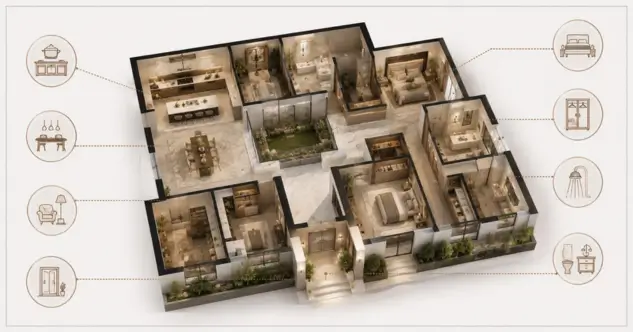
Effective villa interior design in Dubai and Abu Dhabi starts with planning how each area will function before selecting furniture and finishes. Villas often include several living zones, larger rooms, and dedicated spaces for work, entertaining, and family life, so each area should support its purpose while connecting naturally with the rest of the home.
Key considerations for each area include:
1-Living Room
The living room is often the main gathering space and one of the first areas guests experience. Consider:
- Creating balanced seating around a focal point such as a feature wall, fireplace, or television.
- Maintaining clear circulation between furniture pieces.
- Using layered lighting for different activities and moods.
- Incorporating practical storage and display solutions.
- Selecting furniture that suits the scale of the room.
2-Dining Area
The dining area should connect naturally with the kitchen and main living spaces. Consider:
- Leaving adequate clearance around the dining table.
- Positioning lighting directly above the table.
- Choosing furniture that suits the room proportions.
- Maintaining easy access to the kitchen and serving areas.
- Using decorative elements that complement the surrounding spaces.
3-Kitchen
Villa kitchens often function as both cooking and family gathering spaces. Important considerations include:
- Creating an efficient layout for cooking, preparation, and storage.
- Selecting durable and easy-to-maintain surfaces.
- Providing sufficient cabinetry and pantry storage.
- Planning task lighting for work areas.
- Adding a kitchen island or breakfast counter where space allows.
4-Bedrooms
Bedrooms should provide privacy, comfort, and a calm atmosphere. Key priorities include:
- Positioning the bed to create a balanced layout
- Making effective use of natural light while maintaining privacy
- Integrating wardrobes and built-in storage
- Combining lighting for reading, dressing, and relaxation
- Using soft materials and calming color palettes
5-Bathrooms
Villa bathrooms should feel spacious, functional, and easy to maintain. Design considerations include:
- Efficient placement of sanitary fixtures.
- Moisture-resistant materials and finishes.
- Adequate storage for everyday essentials.
- Well-planned task and ambient lighting.
- Ventilation to improve comfort and durability.
6-Home Office and Flexible Spaces
As remote and hybrid work become more common, many villas now include dedicated workspaces or multipurpose rooms. These areas should remain adaptable, allowing homeowners to adjust the space as their lifestyle changes.
A flexible room may function as:
- A home office.
- A study area.
- A library or reading room.
- A hobby or creative studio.
- A guest room when required.
How to Choose Materials and Finishes for Villa Interiors
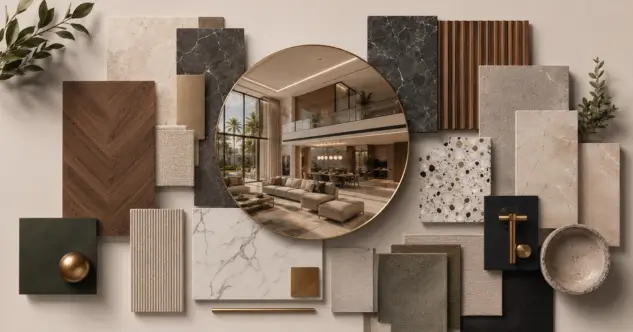
Materials and finishes influence the appearance, durability, and comfort of villa interiors in Dubai and Abu Dhabi. Consider the following factors when making your selections:
- Choose Flooring Based on Function: Select flooring according to how each space will be used. Porcelain tiles and natural stone suit high-traffic areas, while engineered wood can add warmth to bedrooms and private living spaces.
- Use Wall Finishes to Add Character: Combine paint, wood paneling, natural stone, or decorative moldings to introduce texture and visual interest without overwhelming the interior.
- Prioritize Practical Kitchen and Bathroom Surfaces: Choose materials that can handle moisture, heat, stains, and frequent use while remaining easy to clean.
- Balance Colors and Textures: Combine wood, stone, glass, metal, and fabric carefully to create depth and contrast while maintaining visual harmony.
- Focus on a Consistent Material Palette: Rather than using too many finishes, select a limited range of quality materials that work together across the villa and support a cohesive design.
Common Mistakes to Avoid in Villa Interior Design
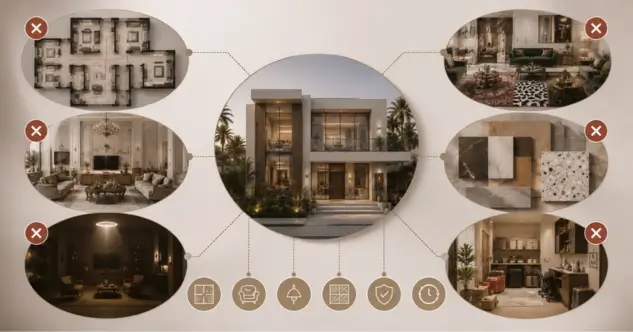
Even a visually strong villa can feel impractical if key planning decisions are overlooked. Avoid these common mistakes:
- Ignoring Space Planning: Designing rooms separately without considering circulation and how spaces connect can create awkward layouts and wasted areas.
- Prioritizing Aesthetics Over Functionality: Choosing furniture, layouts, or finishes based only on appearance can reduce comfort, storage, and everyday usability.
- Mixing Too Many Design Styles: Combining unrelated colors, materials, and furniture styles without a clear direction can make the interior feel disconnected.
- Poor Lighting Planning: Relying on a single light source or ignoring layered lighting can create uneven illumination and reduce the functionality of the space.
- Choosing Materials Based Only on Appearance: Materials should also suit the level of use, maintenance requirements, moisture, heat, and other conditions in each area.
- Overlooking Future Lifestyle Needs: Designing only for current needs can lead to unnecessary changes later. Flexible layouts and adaptable spaces can make the villa easier to update over time.
How to Choose the Right Villa Interior Design Company
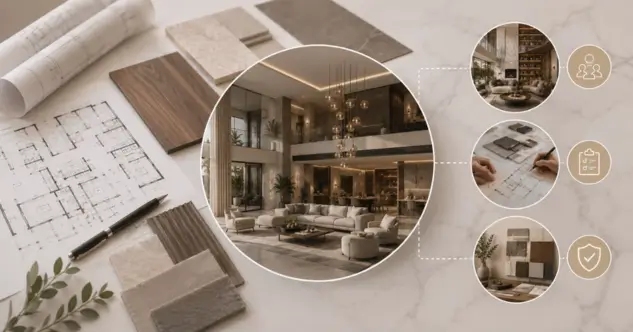
Choosing the best villa interior design company in Abu Dhabi or Dubai requires more than evaluating creativity. Look for a team that understands the scale, planning requirements, and level of customization involved in villa projects:
- Relevant Villa Experience: Review completed villa projects similar to yours in size, architectural style, and level of complexity.
- Understanding of Large-Scale Space Planning: The company should know how to organize multiple living zones, private areas, circulation routes, and connections between indoor and outdoor spaces.
- Custom Design Capability: Villas often require bespoke kitchens, wardrobes, joinery, furniture, and architectural details, so check whether the team can develop solutions specifically for your property.
- Technical Design Expertise: Confirm that the company can prepare the drawings, specifications, lighting plans, and other technical details needed to move the design toward implementation.
- Project Coordination: Ask how the team coordinates designers, contractors, suppliers, and specialists throughout the project.
- Attention to Detail: Review how the company handles materials, lighting, joinery, furniture placement, and finishes across completed villa projects.
The right villa interior design company should understand both the architectural scale of the property and the way you want to live in it.
.
Why Choose G&M for Villa Interior Design?
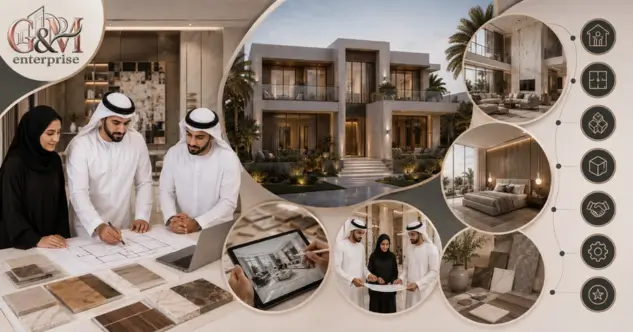
G&M provides villa interior design services in Dubai and Abu Dhabi with a focus on thoughtful planning, custom solutions, and close coordination throughout the project. Our team considers the villa’s architecture, layout, lifestyle requirements, and design direction to create interiors that feel cohesive and practical.
When you work with G&M Enterprise, you benefit from:
- Villa-Specific Design Expertise: We plan large layouts, multiple living zones, private areas, and indoor-outdoor connections around the way you use the property.
- Customized Solutions: We develop layouts, joinery, furniture, and design details specifically for your villa.
- 3D Design Visualization: We help you review key design decisions before implementation.
- Material and Finish Coordination: We select and coordinate materials to maintain consistency across the property.
- Project Coordination: We work closely with architects, contractors, suppliers, and other specialists to keep design requirements aligned during execution.
- Attention to Detail: We maintain a consistent design direction across lighting, furniture, finishes, and architectural details.
Ready to transform your villa? Explore G&M’s Interior & Exterior Design services in Dubai and Abu Dhabi.
Conclusion
Successful villa interior design in Dubai and Abu Dhabi starts with clear planning and a design approach that responds to the property, lifestyle, and long-term needs of the homeowner.
Whether you are designing a new villa or renovating an existing one, working with an experienced villa interior design company can help turn your ideas into a cohesive home that balances comfort, functionality, and refined design.
FAQ
What Should I Consider Before Starting a Villa Interior Design Project?
Start by defining how your family will use the villa, which areas need more privacy, your preferred design style, storage requirements, approximate budget, and any existing furniture or architectural features you want to keep.