



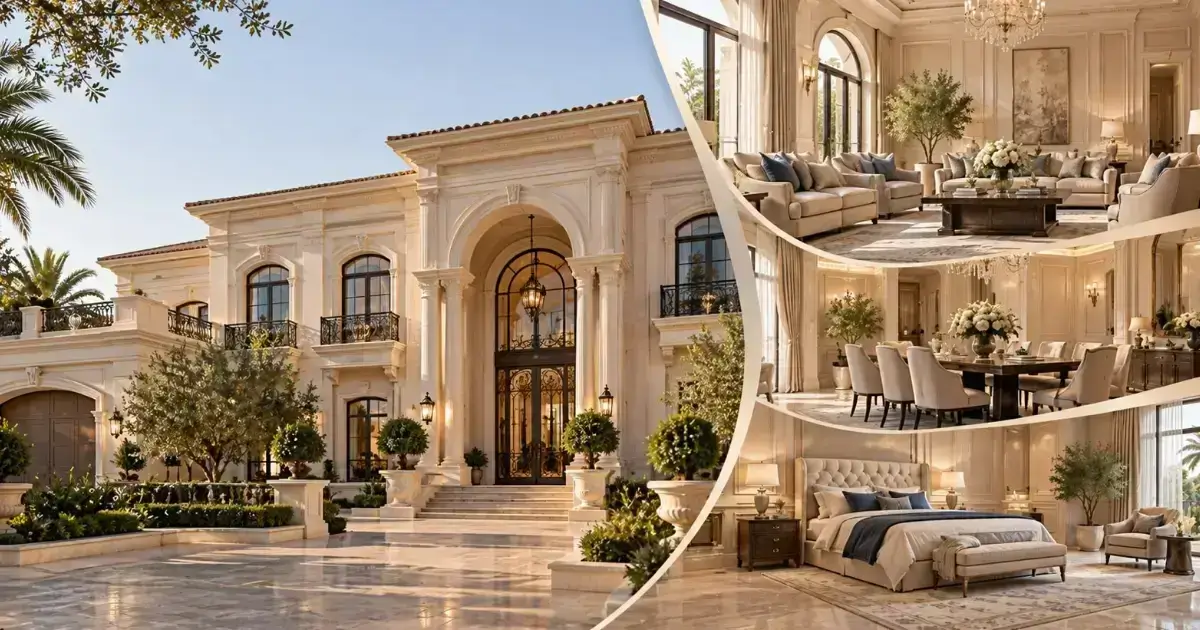
If you are considering a classic villa design, the first decision is not which chandelier, marble, or wall molding to choose. It is whether the proportions, layout, and architectural character of your villa can support a classic look without making the space feel too formal or overloaded.
A successful classic villa should feel balanced from the moment you enter. Room sizes, ceiling heights, door proportions, flooring, lighting, furniture scale, and decorative details all need to work together. In this guide, you will learn how to plan a classic villa step by step, which design elements deserve the most attention, how to choose materials and colors, and how to keep the overall look elegant while still making the home comfortable for everyday living.
How to Plan the Layout of a Classic Villa
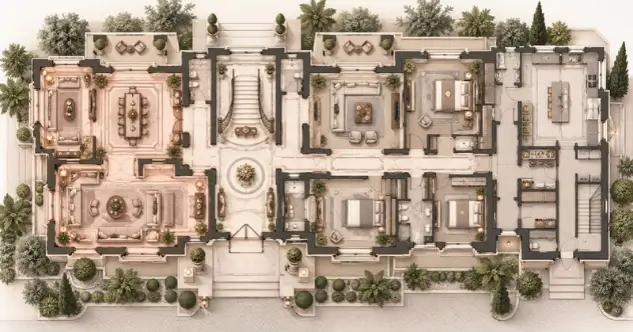
When planning a classic villa design, start with the main axis of the house. The entrance, foyer, staircase, and reception areas should follow a clear visual order rather than feel disconnected.
Private villa development remains significant in Abu Dhabi. According to the Department of Municipalities and Transport, around 20,000 applications for new private villas are received each year, which reinforces the importance of making layout and design decisions carefully from the earliest planning stages.
Focus on these decisions first:
- Plan the entrance view: Position the foyer toward a staircase, reception area, or architectural focal point. Avoid opening the main door directly onto a family living room or service corridor.
- Separate guest and family areas: Guests should reach the majlis, reception, or dining room without passing through private family spaces.
- Align key rooms and openings: Where possible, keep major doors and rooms on clear visual axes. For example, aligning the entrance with the reception and garden view creates stronger symmetry and order.
- Separate service circulation: Kitchens, staff rooms, laundry areas, and service entrances should connect without interrupting guest movement.
- Avoid unnecessary circulation space: Oversized halls and long corridors can waste usable area without improving the classic composition.
For example, if the villa includes a majlis, dining room, and family lounge, avoid connecting all three through one central circulation area. A more practical solution is to give guests a direct route to the majlis and dining room while keeping the family lounge on a separate internal path.
contact us
Adress: Abu Dhabi – Al Wahda Area
Phone: +971 2 446 9100
Phone: +971 50 4850 820
Email: info@gandm.ae
How to Get the Proportions Right in a Classic Villa
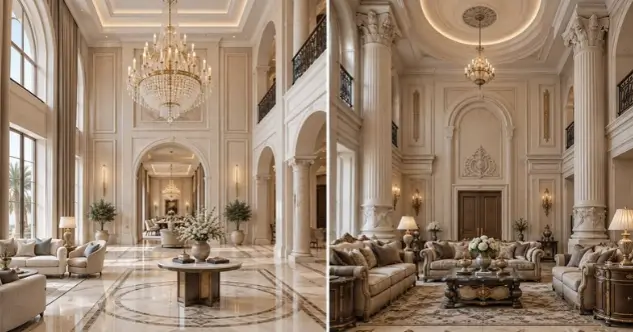
Proportion is what makes a classic villa design feel refined instead of oversized or overly decorative. Before adding moldings, columns, or statement lighting, check whether the main architectural elements are scaled correctly in relation to the room.
Focus on these areas:
- Ceiling height and door scale: Taller rooms usually need doors and openings with enough visual height to avoid looking undersized. Standard-sized doors in a very high-ceilinged space can make the room feel disconnected.
- Wall panels and moldings: The size of wall panels should respond to the wall height and furniture placement. Too many narrow panels can make a large room feel busy, while oversized panels can overpower a smaller space.
- Columns and architectural details: Columns, pilasters, cornices, and arches should match the scale of the façade or interior. Heavy architectural details in a compact room can make the space feel crowded.
- Furniture scale: Large rooms need furniture with enough visual weight, but this does not mean filling the room with oversized pieces. Leave enough space between seating groups, walls, and circulation paths.
- Lighting scale: Chandeliers and pendant lights should relate to both the room size and ceiling height. A fixture that looks impressive in a showroom may feel too small in a double-height foyer or too dominant in a lower-ceilinged room.
For example, in a double-height entrance, using a small chandelier, short doors, and narrow wall moldings can make the architecture feel out of proportion. Increasing the visual scale of these elements creates a more coherent classic composition without adding more decoration.
How to Design a Balanced Classic Villa Exterior
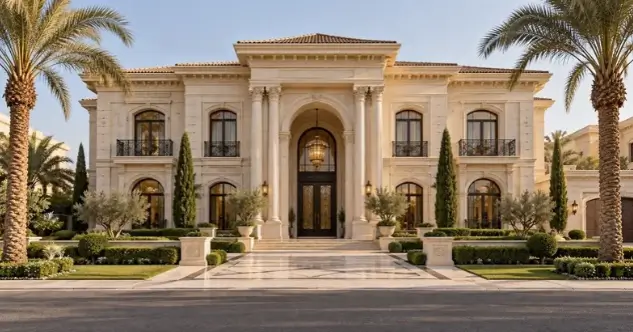
In a classic villa design, the exterior should rely on clear proportions, symmetry, and a well-defined entrance rather than excessive decoration.
Focus on these exterior decisions:
- Build the façade around a clear center: The entrance can act as the main visual anchor, supported by balanced window placement, a portico, or a pediment.
- Give the entrance enough presence: Door height, steps, columns, lighting, and the canopy or arch should feel proportional to the overall façade.
- Keep window proportions consistent: Repeating similar window sizes and alignments creates a stronger visual rhythm. Too many shapes or dimensions can make the façade feel inconsistent.
- Use architectural details selectively: Cornices, pilasters, arches, railings, and moldings should support the structure rather than compete with one another.
- Limit the number of exterior materials: Natural stone, textured plaster, or high-quality paint finishes can create a refined result without mixing several contrasting cladding materials.
- Review the façade from a distance: Check the overall massing and balance from the street, not only the decorative details shown in close-up drawings.
How to Use Classic Details Without Overloading the Interior
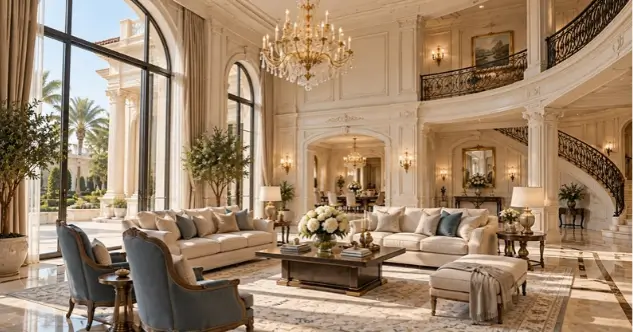
In a classic villa design, the interior can quickly feel heavy if moldings, ceiling details, furniture, and decorative pieces all compete for attention. The goal is to choose where detail matters most and keep the surrounding elements quieter.
This balance is especially important in interior design Dubai and Abu Dhabi projects, where classic detailing needs to work with generous spaces, modern comfort, and everyday use. To keep the interior refined without making it feel overloaded, focus on these choices:
- Limit strong decorative features: Choose one main focal point in each room, such as a fireplace wall, staircase, or framed seating area, instead of highlighting several areas at once.
- Use wall moldings selectively: Apply wall panels where they help define the composition of the room, and leave enough plain surface around artwork, furniture, and openings.
- Keep ceiling details proportional: Cornices, coffers, and ceiling moldings should match the room size and ceiling height rather than dominate the space.
- Repeat the same design language: Use a consistent set of molding profiles and architectural details across connected rooms instead of changing the style from one space to another.
- Leave some areas visually quiet: Not every wall or corner needs decoration. Clear surfaces help the classic details stand out more effectively.
How to Coordinate Materials, Colors, Lighting & Furniture in a Classic Villa
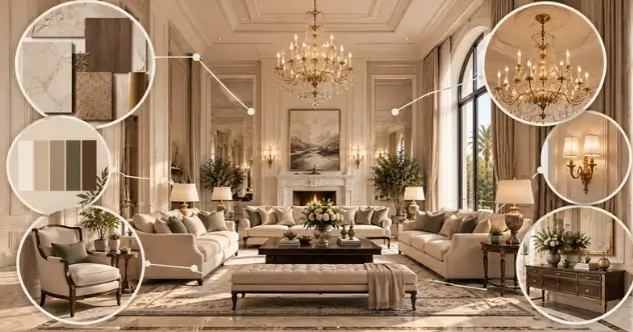
A successful classic villa design depends on how well the main interior elements work together. Instead of choosing each item separately, build the room around one consistent material and color direction.
- Materials: Use a limited combination of marble, natural stone, wood, and metal finishes. Too many contrasting materials can make the interior feel fragmented.
- Colors: Start with a calm base such as off-white, beige, or warm neutrals, then add contrast through darker wood, muted fabrics, or selected accents.
- Lighting: Use chandeliers, wall lights, and concealed lighting to support the architecture and highlight key details without competing with them.
- Furniture: Choose pieces that match the overall design language and repeat the same wood tones, metal finishes, and fabric palette across connected spaces.
A cohesive villa interior design brings materials, colors, lighting, and furniture together so they feel like parts of one composition rather than separate design choices.
How to Adapt a Classic Villa for Modern Living
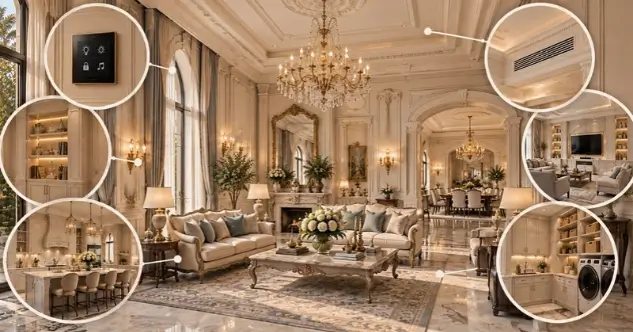
A classic villa design can support modern daily life without losing its character. To integrate practical features without disrupting the architectural details, focus on the following:
- Keep technology discreet: Integrate smart controls, speakers, security systems, and climate controls into walls, ceilings, or cabinetry.
- Add practical storage: Use built-in cabinetry and concealed storage to reduce clutter while maintaining the classic look.
- Make family spaces less formal: Keep reception areas more refined, while family lounges can use simpler finishes and more comfortable furniture.
- Plan service areas for function: Kitchens, pantries, laundry rooms, and storage areas should prioritize workflow and accessibility.
- Coordinate modern systems early: Plan air-conditioning vents, speakers, lighting, and electrical controls before finalizing ceiling moldings and wall panels.
How to Create a Consistent Interior and Exterior Design
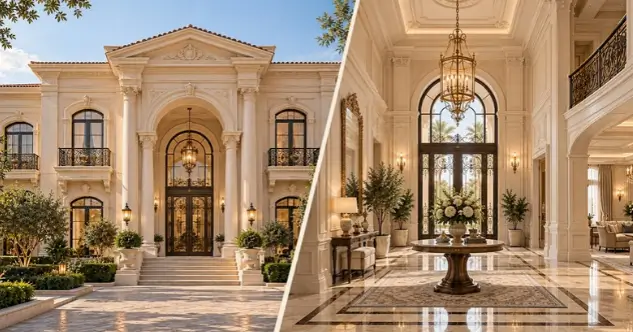
A strong classic villa design should feel connected from the façade to the interior. To maintain that consistency, focus on the following:
- Repeat key materials and tones: Use related stone, wood, metal finishes, or color tones inside and outside the villa.
- Keep architectural details consistent: Doors, arches, moldings, and other features should follow the same design language across both areas.
- Connect the entrance to the interior: The exterior entrance and interior foyer should feel like parts of the same sequence rather than two separate designs.
- Avoid conflicting styles: A heavily detailed classic façade paired with a completely different interior can make the villa feel disconnected.
- Coordinate openings and finishes: Window proportions, door styles, flooring transitions, and material choices should support a smooth visual transition.
A well-planned interior & exterior design approach helps ensure that both sides of the villa follow one clear design direction.
Conclusion
A successful classic villa design depends on making the right decisions from the beginning. Layout, proportions, architectural details, materials, lighting, furniture, and the connection between the interior and exterior should all support the same design direction.
The goal is not to add more classic elements, but to use them with enough control to keep the villa elegant, practical, and comfortable for daily life. When each decision is considered as part of the whole, the result feels more balanced and remains visually consistent over time.
FAQ
Is classic villa design suitable for smaller villas?
Yes, but the scale of decorative and architectural elements should be adjusted to the available space. In smaller villas, balanced proportions and selective detailing usually work better than oversized columns or heavy ornamentation.
Is classic villa design more expensive than other styles?
It can be, especially when natural marble, custom woodwork, detailed moldings, and premium finishes are used. Costs can be controlled by prioritizing key features and simplifying less important decorative elements.
Can I combine a classic exterior with a simpler interior?
Yes, as long as the interior and exterior share some common elements, such as proportions, color tones, materials, or architectural details. The interior does not need to match the same level of ornamentation as the façade.
Does a classic villa require more maintenance?
It depends on the materials and level of detailing. Natural stone, detailed woodwork, and decorative finishes may require more care, so maintenance should be considered when selecting finishes from the beginning.