



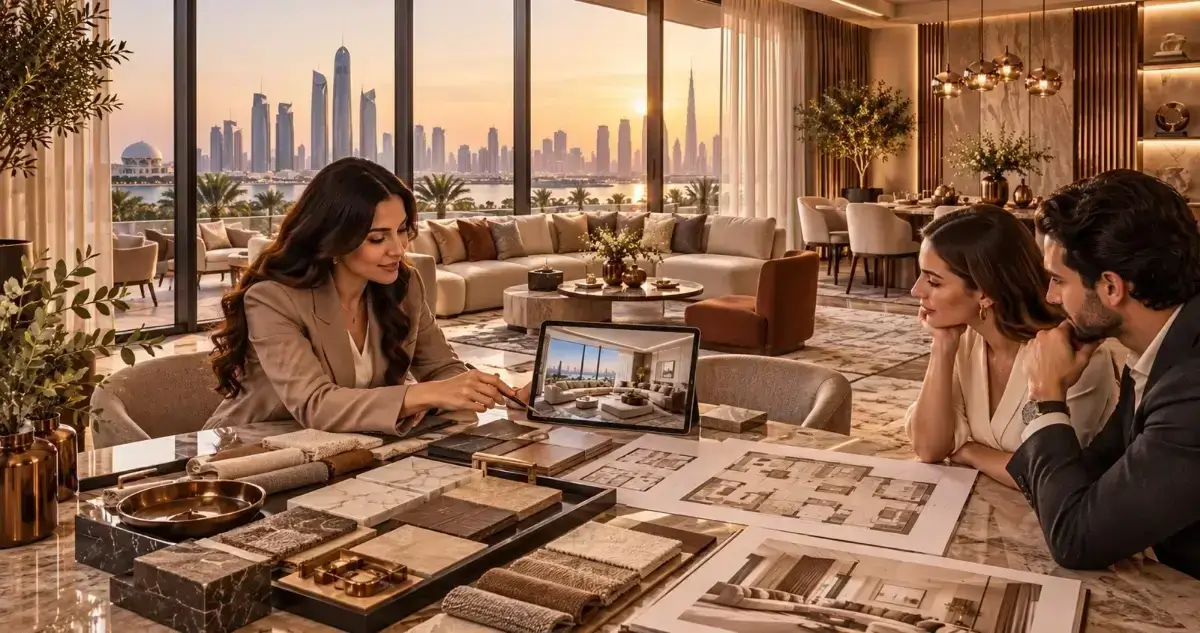
Interior design services in Abu Dhabi and Dubai cover the full process of planning and developing residential and commercial spaces, from layout and space planning to materials, lighting, custom solutions, and final implementation.
Understanding each stage helps property owners make better decisions, avoid costly changes during execution, and create interiors that are functional, cohesive, and suited to how the space will actually be used.
What Do Professional Interior Design Services Include?
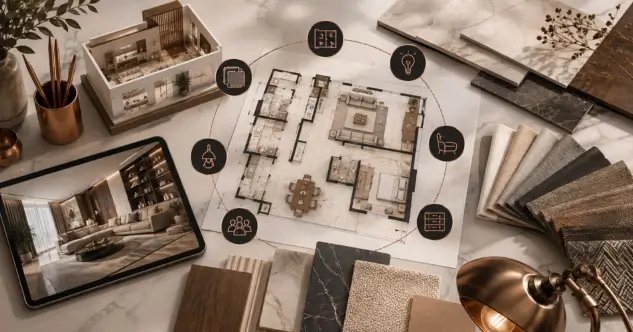
Professional interior design services cover multiple stages of the design process, from understanding how a space will be used to developing a cohesive design that can be implemented effectively. While the exact scope varies by project, the core services typically include:
- Space Planning: Organizing rooms, furniture, and circulation to make efficient use of the available space while maintaining comfort and functionality.
- Concept Development: Creating the overall design direction, including style, color palette, mood, and visual identity that guide the entire project.
- Material and Finish Selection: Choosing suitable flooring, wall finishes, surfaces, fabrics, and other materials based on aesthetics, durability, maintenance, and intended use.
- Lighting Design: Planning natural and artificial lighting to support functionality, create the right atmosphere, and highlight architectural and design features.
- Furniture Selection: Selecting furniture that complements the design concept while considering scale, comfort, functionality, and the proportions of each space.
- Custom Design Solutions: Developing bespoke elements such as built-in storage, cabinetry, feature walls, or custom furniture to meet specific project requirements.
- Design Coordination: Coordinating design elements, specifications, and technical requirements with architects, contractors, suppliers, and other project professionals to maintain consistency during implementation.
For a closer look at interior design services, explore our guide to Interior Design Dubai & Abu Dhabi.
What Types of Spaces Can Benefit from Interior Design Services?
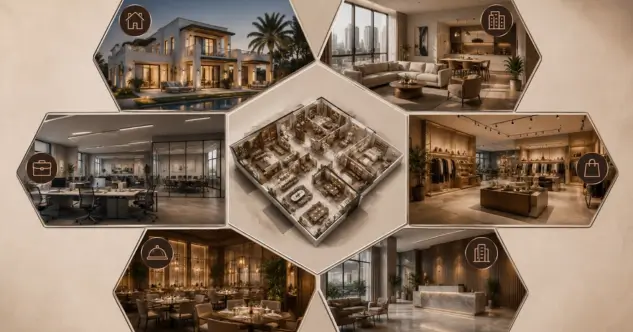
Interior design services can be tailored to different spaces based on their function, layout, and users:
- Villas and Residential Properties: Interior design helps create cohesive living environments that balance comfort, functionality, and personal style across multiple spaces.
- Apartments: Smart space planning, storage solutions, and carefully selected furniture help maximize available space without compromising comfort or aesthetics.
- Offices: Workplace interiors focus on efficient layouts, employee comfort, collaboration, and creating an environment that reflects the company’s identity.
- Retail Spaces: Interior design supports the customer experience by improving circulation, product presentation, brand expression, and the overall shopping environment.
- Hospitality Spaces: Hotels, restaurants, and similar properties require interiors that combine functionality, guest comfort, visual appeal, and a distinctive brand experience.
- Other Commercial Spaces: Professional interior design can support clinics, showrooms, and other business environments through efficient layouts, clear circulation, and a consistent professional identity.
Explore G&M’s Luxury Residential Interior Design Services for tailored villa and apartment interiors designed around your space, lifestyle, and aesthetic preferences.
How to Choose the Right Interior Design Solution?
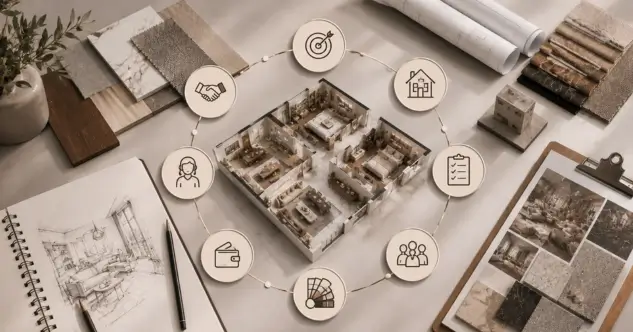
The right interior design solution depends on how the space will be used, the project scope, design priorities, and available budget. According to a study published on ScienceDirect, interior design received a 66.2% importance weighting among design-related considerations in The Springs community in Dubai.
Consider the following factors:
- Project Goals: Define whether the priority is improving functionality, optimizing space, updating the interior, or creating a specific atmosphere.
- Property Type: Residential, office, retail, and hospitality projects each require different layouts, materials, and functional considerations.
- Scope of Work: Determine whether you need specific services such as space planning and material selection or a complete interior design solution.
- Functional Requirements: Consider circulation, storage, privacy, accessibility, comfort, and how the space will be used every day.
- Design Preferences: Identify the style, materials, colors, and visual direction that suit your preferences or brand identity.
- Budget: Set a realistic budget to guide decisions on materials, finishes, furniture, and custom features.
- Level of Support: Decide whether you need design consultation only or support through design development, coordination, and implementation.
Evaluating these factors helps you choose an interior design solution that fits both the practical requirements and overall direction of the project.
.
What Is the Interior Design Process from Concept to Completion?
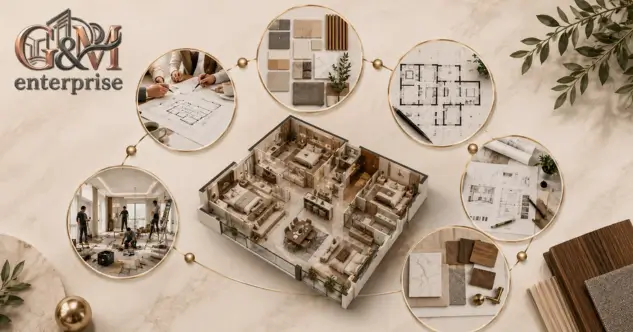
The interior design process moves through a series of coordinated stages that turn initial requirements into a functional and complete space:
- Initial Consultation: Understanding the client’s needs, preferences, project scope, and priorities. For example, a villa may require separate family, guest, and entertainment areas.
For a closer look at planning, layouts, materials, and design considerations for villas, read our guide to Villa Interior Design. - Concept Development: Defining the overall design direction, including style, colors, materials, and visual character.
- Space Planning: Organizing layouts, circulation, furniture placement, and the relationship between different areas. In an office, this may involve balancing private workspaces with collaborative areas.
- Design Development: Turning the approved concept into detailed layouts, lighting plans, custom elements, and specifications for implementation.
- Material and Finish Selection: Selecting flooring, wall finishes, fabrics, surfaces, fixtures, and other materials based on appearance, durability, and functionality.
- Implementation and Coordination: Coordinating with contractors, suppliers, and specialists to ensure the approved design is executed accurately.
- Final Review and Completion: Reviewing the completed space, resolving outstanding details, and confirming that the final result aligns with the approved design and project requirements.
What Deliverables Can You Expect from Interior Design Services?
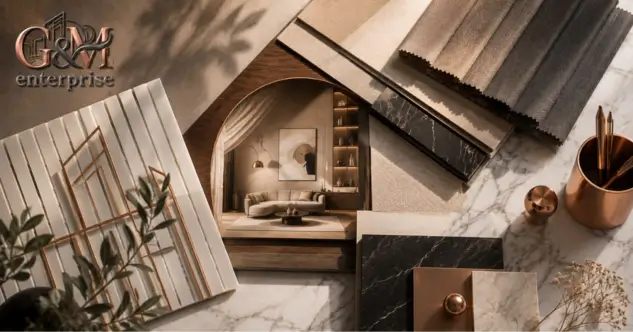
Depending on the project scope, interior design services may include the following deliverables:
- Concept Boards: Define the design direction, style, colors, and material palette.
- Space Plans: Show room layouts, furniture placement, circulation, and functional zones.
- 3D Visualizations: Help clients preview the proposed design before implementation.
- Material and Finish Selections: Specify flooring, wall finishes, surfaces, fabrics, and fixtures.
- Lighting Plans: Define lighting placement, types, and overall lighting requirements.
- Technical Drawings: Provide detailed information for contractors and specialists during implementation.
- Furniture and Custom Joinery Details: Cover furniture, cabinetry, built-in elements, and other custom features.
- Design Specifications: Organize key materials, products, and design details into a clear project reference.
How Are Interior Design Services Customized for Each Project?
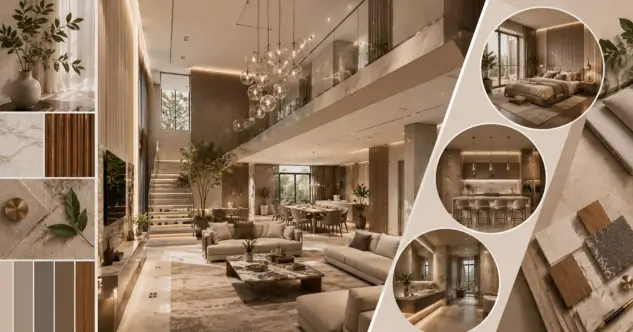
Interior design in Abu Dhabi often requires adapting layouts, privacy, lighting, and material choices to the specific characteristics of the property and the way its occupants use the space.
Key factors that shape a customized design include:
- Property Size and Layout: Room dimensions, proportions, circulation paths, and the existing layout influence how the available space can be organized effectively.
- User Profile and Daily Routines: The design may change depending on who uses the space, how often different areas are used, and the level of privacy, storage, or flexibility required.
- Privacy and Circulation: Entrances, movement between rooms, guest areas, family spaces, and private zones are planned according to how people move through and use the property.
- Existing Architectural Conditions: Columns, ceiling heights, windows, structural elements, and other fixed features are incorporated into the design from the beginning.
- Natural Light and Site Conditions: Window locations, daylight levels, and the orientation of individual spaces can influence lighting, materials, furniture placement, and overall design decisions.
- Design Identity: The interior is developed around the preferred visual direction or, in commercial projects, the brand identity that the space needs to communicate.
Considering these project-specific factors allows the design to respond to the property and its users rather than relying on a one-size-fits-all solution.
How to Choose the Right Interior Design Company?
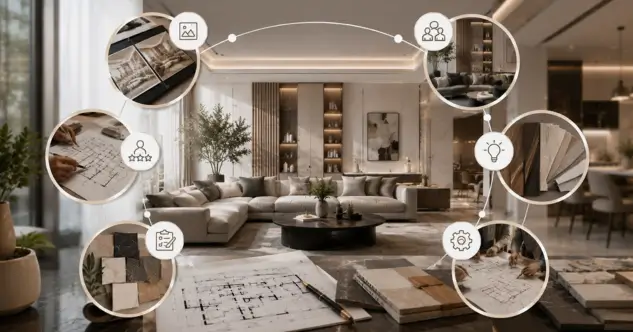
When choosing a company for interior design in Abu Dhabi and Dubai, consider the following factors:
- Portfolio: Review completed projects to assess design quality, versatility, and experience with properties similar to yours.
- Relevant Experience: Look for experience with your property type, project scale, and level of complexity.
- Scope of Services: Check whether the company can support the stages your project requires, from concept development and space planning to detailed design and implementation coordination.
- Local Experience and Approvals: Consider whether the team understands local project requirements and can coordinate any relevant approvals or documentation required for the scope of work in Dubai or Abu Dhabi.
- Communication: Choose a team that communicates clearly, provides regular updates, and involves you in important design decisions.
- Design Approach: Look for a company that develops solutions around your needs and the characteristics of the property rather than applying the same style to every project.
- Project Management: Assess how the company coordinates timelines, contractors, suppliers, materials, and implementation requirements.
The right interior design firm should combine design expertise, local project knowledge, clear communication, and effective coordination from concept through completion.
Why Choose G&M for Interior Design Services?
G&M delivers interior design services in Abu Dhabi and Dubai for residential and commercial projects. We combine practical planning, creative design, and clear coordination to guide each project from concept to completion.
We tailor every design to the property, its users, and functional needs. Our team plans layouts, selects materials and finishes, coordinates lighting and custom details, and works closely with project teams to keep the design consistent during implementation.
Explore G&M’s Interior and Exterior Design solutions in Dubai and Abu Dhabi.
Conclusion
The right interior design services in Dubai and Abu Dhabi help you create a space that works well, reflects your goals, and makes better use of the property.
A strong interior starts with clear planning, thoughtful design decisions, and consistent coordination throughout the project. By working with an experienced interior design firm, you can turn your ideas into a practical, cohesive space that supports the way you live, work, or do business.
FAQ
Do you provide interior design services in Abu Dhabi & Dubai?
How much does interior design cost in Abu Dhabi & Dubai?
Interior design costs in Dubai and Abu Dhabi vary depending on the size of the space, project scope, level of customization, materials, furniture, and whether the project involves design only or additional execution requirements. A detailed project assessment helps determine a more accurate budget.
Do I need approvals for an interior design project in Abu Dhabi & Dubai?
Approval requirements depend on the property, location, and type of work involved. Some fit-out, renovation, or modification works may require approval from the relevant municipality, developer, building management, or other authorities before work begins.
How long does an interior design project take in Abu Dhabi & Dubai?
The timeline depends on the size and complexity of the project. A residential apartment may require a different schedule from a villa, office, or larger commercial space. Design development, material selection, approvals, and the scope of work can all affect the overall timeframe.