



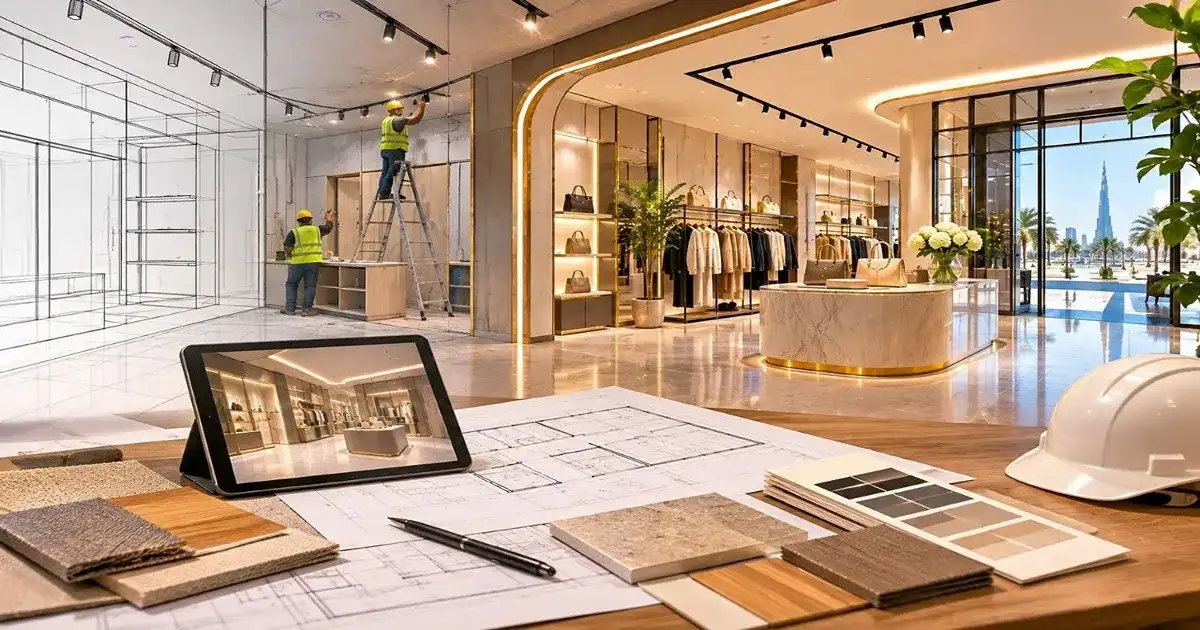
A shop’s success begins with a design that attracts customers and reflects the brand identity from the very first moment. Shop interior design is not simply a matter of arranging furniture and colors, but a core element of the shopping experience and a driver of sales. This guide covers shop design styles in the UAE, how to choose the right layout, lighting, and materials, alongside execution costs and the latest technologies used in 2026.
What Difference Does Shop Interior Design Make to Your Sales?
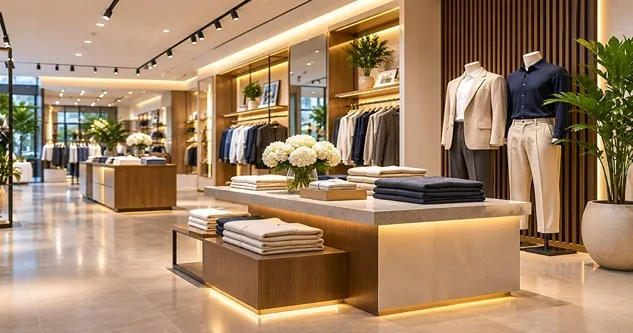
Shop interior design influences purchasing decisions through the way products are displayed, the space is organized, and customer movement is facilitated inside the store. A successful design gives visitors the chance to discover products and encourages them to spend more time in the store.
A well-considered layout helps increase the value of purchases per visit, reinforces the brand’s visual identity, and gives customers an experience that brings them back again.
The Relationship Between Shop Interior Design and Comprehensive Interior Design
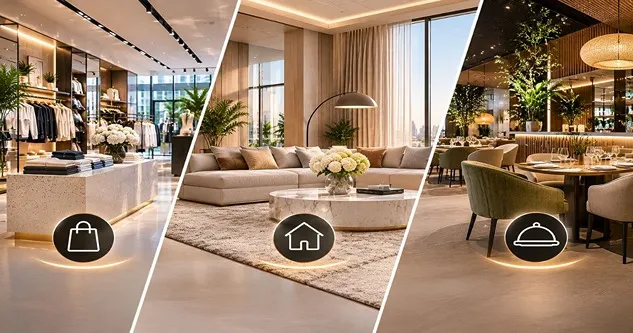
Shop interior design is one of the specializations within commercial interior design, alongside residential design and hotel and restaurant design. These fields share elements of lighting, materials, and space distribution, but differ in their goals and application.
Store design focuses on customer movement, product display, and encouraging purchases, while residential design is concerned with comfort and personal identity. You can learn about the various specializations in the UAE market through Interior Design in Dubai and Abu Dhabi.
What Are the Types of Shops and How Does Each One’s Design Differ?
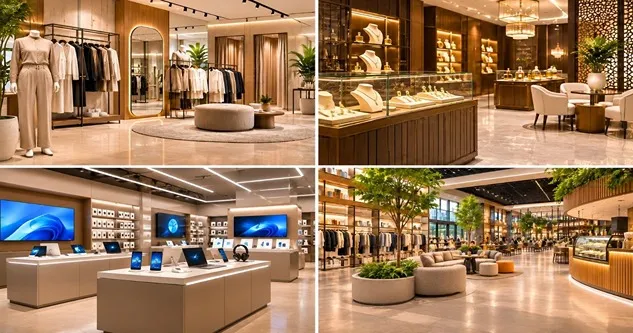
The shop interior design approach is determined by the nature of the products and the way customers shop, which is why each business activity requires a design treatment that suits its needs.
Fashion Boutique
Fashion store design relies on wide aisles, soft lighting, clear mirrors, and comfortable fitting rooms. These elements help customers discover and try on clothing easily before purchasing.
Velvet, linen, and wood materials add a distinctive character to the store and give it a warmer identity than relying on cold white lighting alone.
Jewelry and Perfume Store
Jewelry and perfume stores require low-density display units, appropriate distances for viewing products, and precise lighting that reveals their details without glare. Seating and consultation areas also provide a comfortable space for customers during the selection process.
In the Gulf market, a successful perfume store design combines Western luxury with elements inspired by incense, oud, and dark wood.
Technology and Electronics Store
Technology store design centers on making products available for hands-on experience through open spaces that allow free movement. Lighting with a color temperature between 3,500 and 4,000K suits these stores to show screen colors and device details clearly.
Polished concrete and metals are used to reinforce the technical character, with cables concealed and power points organized within display units.
Multi-Purpose Concept Store
Concept stores in the UAE bring together shopping, entertainment, and different experiences within a single space. Their design relies on dividing the space into visually independent zones while maintaining ease of movement between them.
Lighting that changes according to the nature of each zone helps distinguish sections without the need for physical dividers.
How Does Space Layout Affect Customer Behavior Inside the Store?
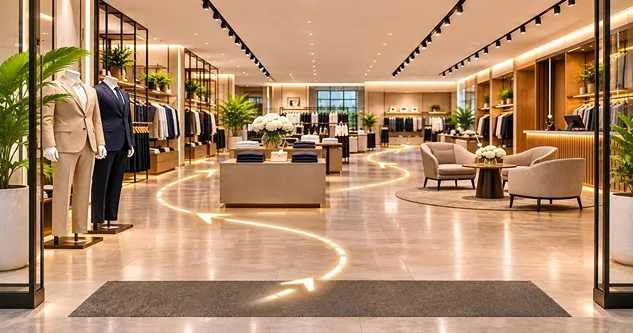
According to data published by Retail TouchPoints, 75% of purchasing decisions are made inside the store, making space distribution an important factor in guiding customer movement. The most important layout principles include:
- Transition zone at the entrance: Providing a space that allows the customer to enter and get a feel for the store before reaching the products.
- Main path: Designing a natural route that encourages visitors to explore the inner sections, with attraction points distributed throughout the store.
- Visual product hierarchy: Allocating appropriate positions and lighting for primary, seasonal, and promotional products.
- Consultation areas: Providing seating and spaces for discussing product details, especially in luxury and jewelry stores.
- Cashier position: Choosing a location that does not cause congestion or obstruct customer movement inside the store.
What Role Does Lighting Play in Shop Interior Design?
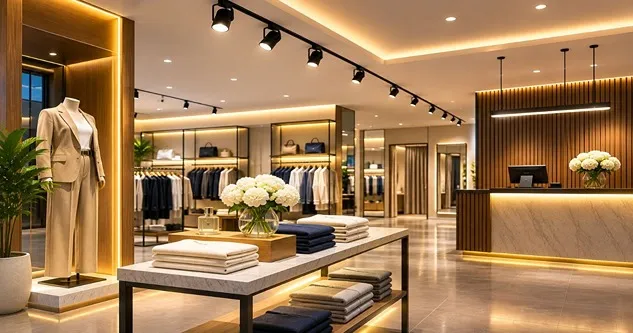
Lighting affects how products look and the overall atmosphere of the store, and data from the Lighting Research Center points to the possibility of appropriate lighting design being associated with a sales increase of between 20 and 30%. The system typically consists of three layers:
- Ambient: Provides the general lighting for the space and sets the store’s atmosphere.
- Accent: Directs light toward the main products to highlight them.
- Task: Used at the cashier, fitting rooms, and service areas.
The color temperature differs by business type, with 3,000K suiting fashion and luxury stores for the warmth it provides, while 3,500 to 4,000K suits technology and electronics stores for showing details clearly.
How Do Materials and Colors Reflect Your Brand Identity?
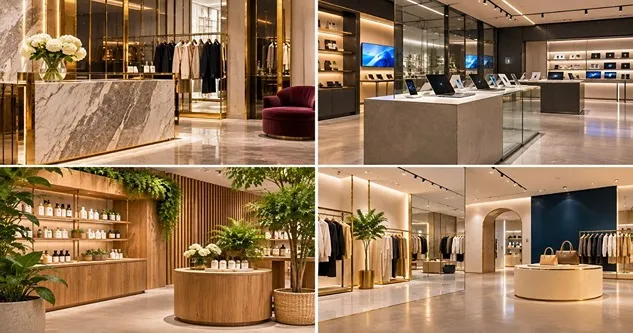
Choosing materials and colors helps translate the brand’s personality into visible elements inside the store. The most prominent options used include:
- Quiet luxury: Natural stone, polished metals, and velvet for luxury stores.
- Technology and modernity: Polished concrete, glass, and dark metals for contemporary fashion and technology stores.
- Nature and sustainability: Oak wood, organic materials, and earthy tones for health and wellness brands.
- Neutral colors as a base: Using neutral walls to highlight products, with bold colors reserved for the facade and accent points.
In the UAE, materials must withstand heavy use and daily cleaning, so performance specifications should be reviewed before approving them for the project.
What Is the Difference Between a Mall Store and a Standalone Store in the UAE?
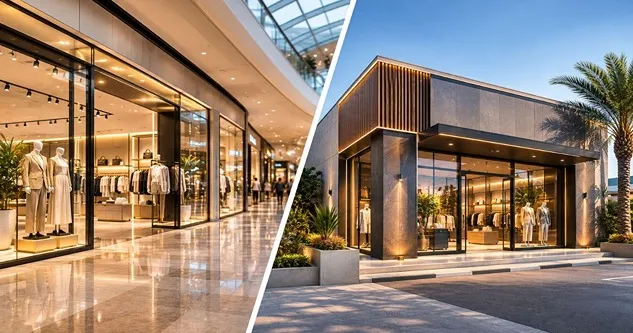
Stores inside malls are subject to specific requirements covering facade height, signage types, fire suppression systems, and contractor working hours. The facade becomes the primary element for attracting shoppers’ attention among neighboring stores.
Standalone stores enjoy greater freedom in facade and exterior lighting design, but require solutions that account for direct sunlight, high temperatures, and their effect on materials and the entry experience. Fit-out companies in Dubai and Abu Dhabi address these requirements through solutions suited to the UAE’s climate.
Execution costs also differ, with basic fit-out in Abu Dhabi ranging from AED 200 to 300 per square foot, while the premium level ranges from AED 300 to 500. In Dubai’s major malls, costs start from AED 500 and can exceed AED 2,000 per square foot at luxury locations.
What Smart Technologies Are Entering Shop Interior Design in the UAE in 2027?
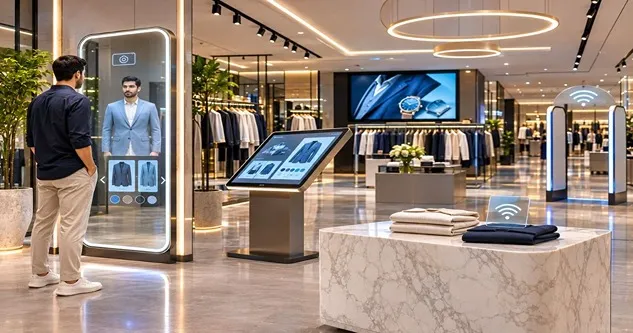
Smart retail technologies have become part of store design targeting mid-range and above segments. The most prominent applications include:
- Smart mirrors: Allow virtual try-ons for colors and cuts, and increase average customer dwell time by more than four minutes.
- Interactive display screens: Show products and seasonal offers and guide customers through the store.
- RFID systems: Provide data on the zones that attract the most visitors and help improve product distribution.
- Dynamically adjustable lighting: Adapts to the time of day and seasonal occasions without the need for manual adjustment.
How Much Does Shop Interior Design Cost in the UAE?
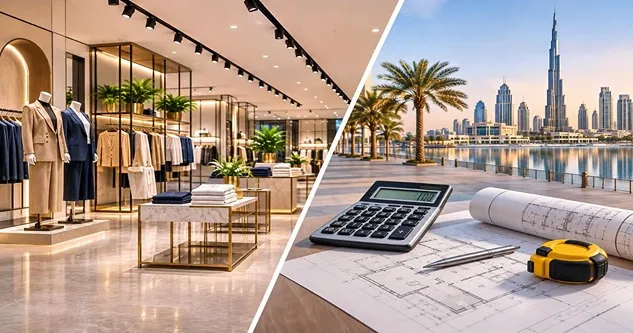
Shop interior design costs differ by emirate, finishing level, and location type. The following are price estimates in the UAE market for 2026:
- Abu Dhabi, basic fit-out: AED 200 to 300 per square foot.
- Abu Dhabi, premium fit-out: AED 300 to 500 per square foot.
- Dubai, basic fit-out: AED 500 to 800 per square foot.
- Dubai, standard fit-out: AED 800 to 1,200 per square foot.
- Dubai, luxury fit-out in major malls: AED 1,200 to 2,000 and above per square foot.
The cost per square foot may be higher for smaller stores compared to larger ones, because facade, licensing, and lighting costs remain fixed regardless of the space size. Execution timelines range from 6 weeks for small stores to 16 weeks for larger projects requiring special mall approvals and preparations.
To understand the difference between engaging a specialist design and fit-out company versus contracting separate contractors, you can review the interior design and fit-out company page.
Why G&M Is the Ideal Partner for Shop Interior Design in the UAE?
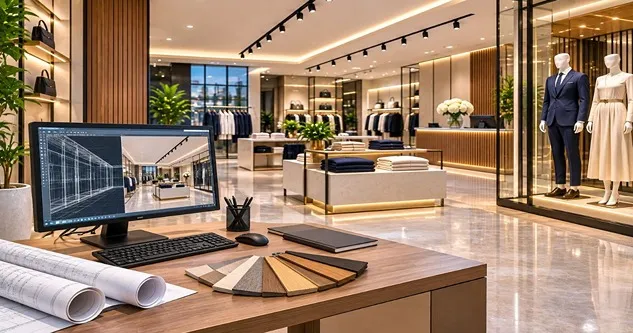
G&M, based in Abu Dhabi, provides commercial store design solutions using AI-driven space simulation and lighting analysis before execution begins, helping match the final design to the approved visualization and reduce costly modifications.
The company’sInterior and Exterior Design services cover the design of stores, restaurants, and various commercial activities, with more than 12 design styles and turnkey solutions that cover the project from concept through handover.
contact us
Adress: Abu Dhabi – Al Wahda Area
Phone: +971 2 446 9100
Phone: +971 50 4850 820
Email: info@gandm.ae
FAQs
Can a Small Store Under 50 Square Meters Be Designed Professionally?
Yes, professional shop interior design for small spaces is possible through using high wall-mounted display units, integrated furniture, and distributing accent lighting to give the space a sense of openness.
What Is a Realistic Timeline for Designing and Executing a Store in the UAE?
Small stores typically need 6 to 10 weeks, medium stores 10 to 14 weeks, while major mall stores can take up to 18 weeks due to approval procedures. Importing materials and manufacturing custom furniture are among the most common causes of delay.
How Does Shop Interior Design Affect Brand Identity in the Long Term?
The store’s design reflects the brand’s personality in its direct interaction with customers. Consistency between the visual identity, the space, and the products helps build trust and encourages repeat visits, while a design that does not align with the brand identity can weaken customer perception even when the products are of high quality.
When Should Shop Interior Design Be Renewed?
A full renewal is generally recommended every 5 to 7 years. Indicators that call for reviewing the design include a drop in customer dwell time inside the store, a decline in conversion rates despite stable visitor numbers, or the emergence of competitors with more modern designs in the same market.