



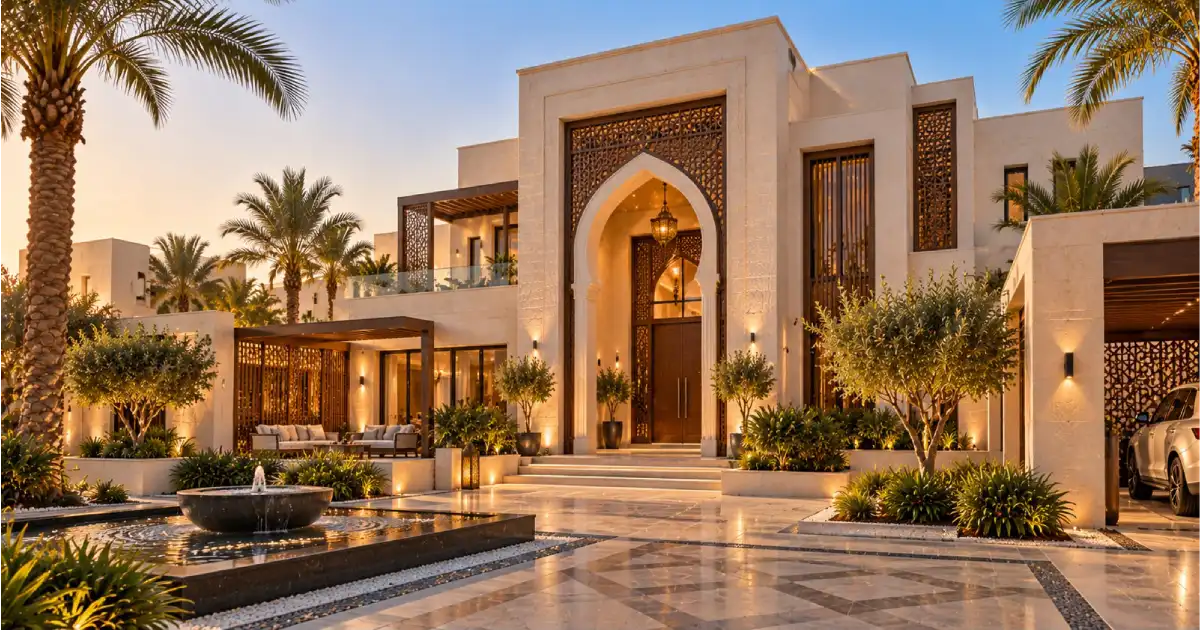
An Arabic villa design in Abu Dhabi does not need to rely on heavy ornamentation to express its identity. The challenge is deciding which Arabic elements are worth keeping and how to adapt them to the way you want to live today. From courtyards and shaded spaces to arches, screens, materials, and room layouts, every choice should have a purpose. In this guide, you’ll find practical ways to create an Arabic-inspired villa that feels authentic, comfortable, and suited to modern living.
How Do You Give a Villa an Arabic Identity Without Overdesigning It?
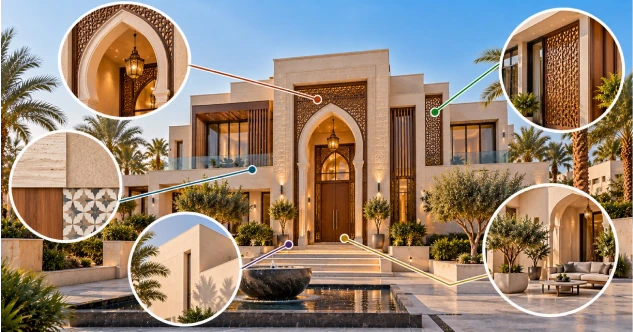
To give your villa a clear Arabic identity without making the design feel heavy, choose a few defining elements and use them consistently. Focus on:
- Choose one clear design direction: Decide whether the villa will draw more from Gulf, Islamic, Moroccan, or another Arabic influence instead of mixing several styles without a clear connection.
- Use architectural features selectively: An arch at the entrance, a decorative screen, or a distinctive doorway can establish the character without repeating the same feature throughout the villa.
- Let materials support the style: Natural stone, warm wood, textured plaster, and patterned tiles can introduce Arabic character without relying entirely on ornamentation.
- Keep decorative patterns controlled: Use geometric or traditional patterns in selected areas, such as screens, flooring, or feature walls, rather than across multiple surfaces.
- Balance traditional and simple elements: Pair detailed Arabic features with cleaner walls, furniture, and finishes so the traditional elements remain noticeable without overwhelming the space.
The goal is not to add as many Arabic details as possible, but to choose the right ones and give each element enough space to stand out. Need expert guidance for your villa? G&M experts can help you plan a design that balances Arabic character, modern living, and your practical needs.
contact us
Adress: Abu Dhabi – Al Wahda Area
Phone: +971 2 446 9100
Phone: +971 50 4850 820
Email: info@gandm.ae
How Should You Plan the Layout of an Arabic Villa?
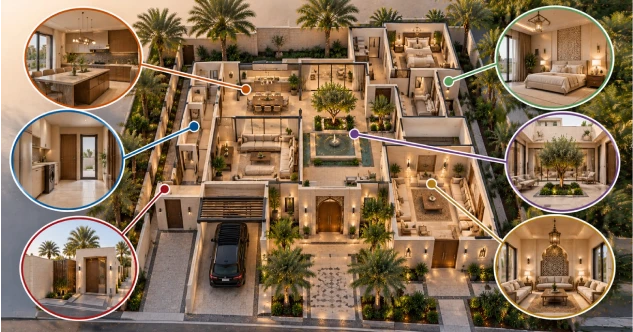
Plan an Arabic villa around privacy, guest access, and easy movement between spaces:
- Separate guest and family areas: Place the majlis and formal reception spaces where guests can reach them without passing through private family areas.
- Give the majlis convenient access: Position it near the main entrance or provide a separate entrance if it is frequently used for guests.
- Connect everyday family spaces: Arrange the living room, dining area, and kitchen to make daily movement between them easy. If space is limited, a well-planned small villa design can help you organize family, guest, and service areas without making the layout feel crowded.
- Plan service circulation: Connect the kitchen, service areas, and service entrances without unnecessarily crossing guest or family zones.
- Connect the courtyard to useful spaces: If the villa has a courtyard, position it beside rooms that can benefit from direct access rather than treating it as a decorative feature.
- Keep bedrooms away from guest circulation: In multi-storey villas, place bedrooms and other private spaces away from formal reception areas and frequent guest movement.
How Can a Courtyard Improve an Arabic Villa Design?
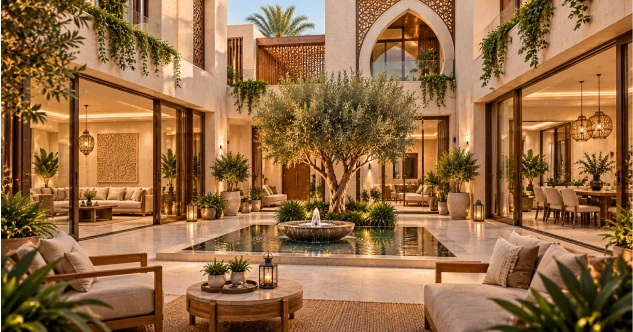
A courtyard can add more than traditional character to an Arabic villa. It can become a practical part of everyday living. According to ScienceDirect, an optimized courtyard design in Dubai reduced outdoor temperature by around 2°C, highlighting the value of well-planned courtyards in the local climate.
Key benefits include:
- Create a private outdoor space: An internal courtyard provides an outdoor area that feels more protected from street views and neighboring properties.
- Bring daylight into deeper spaces: Rooms facing the courtyard can receive more natural light, particularly in layouts where some spaces are far from the exterior facade.
- Connect several rooms to one shared area: Living rooms, dining spaces, or family areas can open toward the courtyard, making it a central space rather than an isolated feature.
- Create a comfortable family gathering area: Add shaded seating, planting, or a water feature according to how you plan to use the space.
- Improve the view from inside: Instead of looking toward blank walls or service areas, selected rooms can face a landscaped courtyard.
Before adding a courtyard, make sure it has a clear purpose and sufficient space. A courtyard that is too small or disconnected from the main rooms may add little practical value.
How Do You Design a Modern Arabic Majlis?
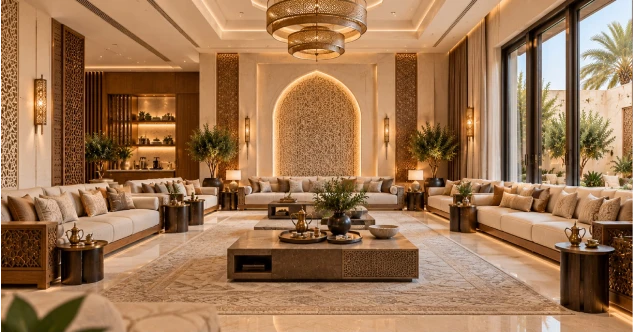
To make a majlis suitable for modern living, focus on flexibility, comfort, and practical use:
- Choose flexible seating: Use a layout that works for both small visits and larger gatherings.
- Leave enough circulation space: Keep clear paths between seating, doors, and serving areas, especially when the majlis is full.
- Plan for serving and storage: Provide convenient access to a pantry or preparation area, with storage for coffee, refreshments, and serving items.
- Make the space comfortable for longer gatherings: Consider seating comfort, ventilation, temperature control, and access to nearby guest facilities.
- Use Arabic details selectively: Add patterned panels, traditional materials, or crafted details in specific areas rather than decorating every surface.
Where Should You Use Arches, Screens, and Arabic Details?
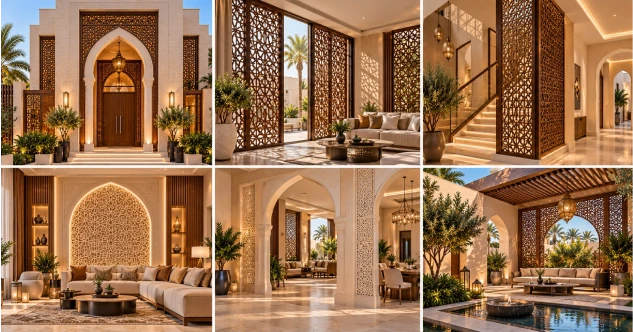
Arabic details work best when they highlight specific areas rather than appear everywhere. Consider using them in:
- Entrances: An arch, carved door, or framed opening can establish the Arabic character from the first view.
- Windows and openings: Screens can add visual detail while helping provide shade and privacy.
- Staircases and corridors: Decorative screens or patterned panels can define these areas without filling them with ornamentation.
- Feature walls: Use geometric patterns, textured finishes, or crafted details on one selected wall instead of repeating them throughout the room.
- Transitions between spaces: Arched openings can distinguish connected spaces without completely separating them.
- Outdoor areas: Screens, arches, and patterned details can also be used around courtyards, terraces, and shaded seating areas.
Choose a few locations where these elements will have the strongest visual or practical purpose rather than repeating the same detail across the villa.
How Do You Choose Materials and Finishes for an Arabic Villa?
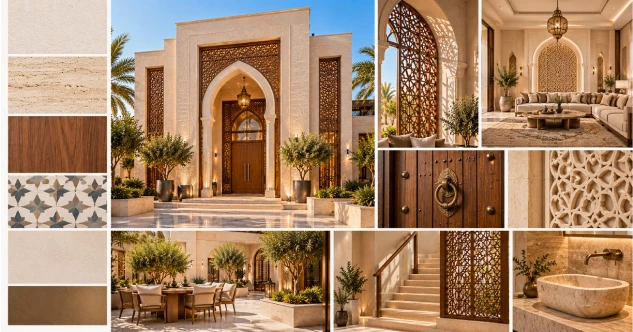
Choose materials that support the Arabic character while remaining practical for everyday use. Focus on a limited palette rather than introducing a different finish in every space:
- Start with a neutral base: Use plaster, stone, or warm neutral finishes for larger surfaces, then add stronger details in selected areas.
- Use natural materials where they make an impact: Stone and wood can work well around entrances, feature walls, staircases, or other focal areas without covering the entire villa.
- Add patterned finishes selectively: Use geometric tiles, carved panels, or decorative surfaces in smaller areas where the pattern can stand out.
- Keep finishes consistent between spaces: Repeat selected materials or tones across connected areas to create continuity instead of designing each room separately.
- Consider maintenance before choosing a finish: Check how easily each material can be cleaned, repaired, or refinished, particularly in frequently used or exposed areas.
- Use craftsmanship as a feature: A well-made door, screen, panel, or stone detail can add more Arabic character than using decorative finishes across multiple surfaces.
How Do You Mix Arabic and Modern Interior Styles?
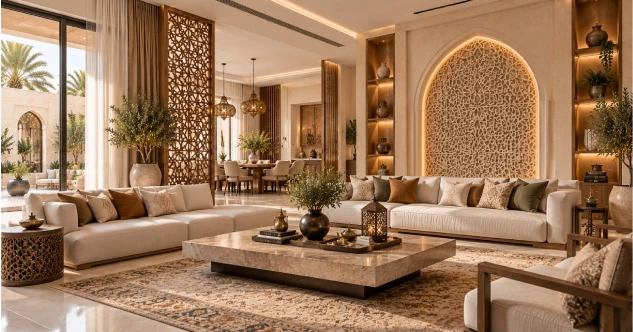
Combine modern simplicity with a few carefully chosen Arabic details:
- Keep furniture simple: Use clean-lined furniture and introduce Arabic character through rugs, cushions, artwork, or side tables.
- Use a controlled color palette: Start with warm neutrals and add richer tones through smaller details.
- Highlight craftsmanship: Pair handcrafted pieces with modern lighting, cabinetry, and finishes.
- Keep connected spaces consistent: A well-planned interior design Dubai approach can carry Arabic influences throughout the villa without making every room look traditional.
What Arabic Villa Design Mistakes Should You Avoid?
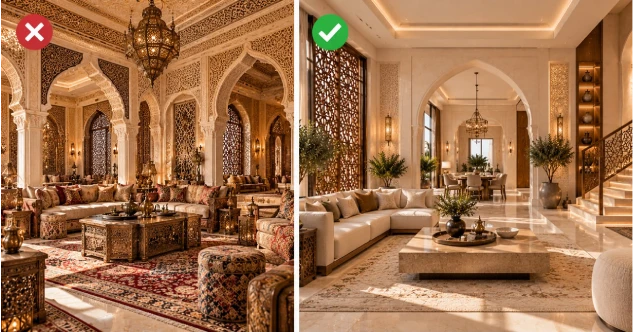
Avoid these common mistakes when creating an Arabic villa design:
- Mixing too many Arabic styles: Combining Moroccan, Gulf, Islamic, and other influences without a clear direction can make the design feel disconnected.
- Repeating decorative elements everywhere: Arches, patterns, screens, and carved details lose their impact when used in every room and surface.
- Choosing decoration over function: Traditional features should support how the villa is used rather than interfere with movement, comfort, or daily routines.
- Making every room heavily themed: Carry the Arabic character throughout the villa without giving every space the same level of decoration.
- Copying traditional details without adapting them: Consider the villa’s proportions, layout, and modern requirements before introducing traditional architectural features.
How Do You Keep an Arabic Villa Timeless?
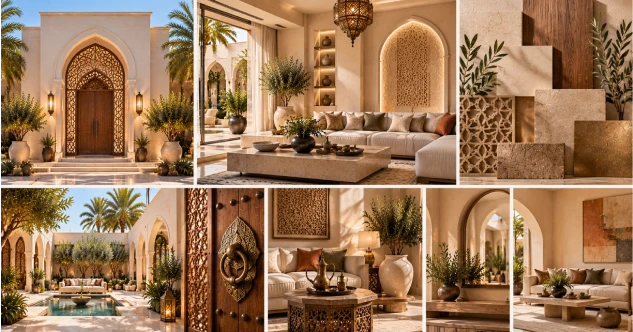
A timeless Arabic villa should preserve its character without depending heavily on current trends. Focus on:
- Invest in permanent architectural features: Give priority to well-proportioned openings, doors, courtyards, and crafted details rather than temporary decorative trends.
- Keep large surfaces simple: Use restrained finishes on walls, floors, and ceilings so they remain easy to update around.
- Choose quality over quantity: One well-crafted Arabic feature can have more impact than several decorative elements.
- Make trends easy to replace: Introduce changing colors and styles through furniture, textiles, artwork, and accessories rather than permanent finishes.
- Prioritize materials that age well: Choose finishes that can retain their appearance or be maintained without requiring major replacement.
Conclusion
A successful Arabic villa design comes from choosing traditional elements with purpose and adapting them to modern living. Focus on a layout that supports your daily needs, use Arabic details selectively, and invest in materials and architectural features that will last. The result should feel distinctly Arabic without compromising comfort, function, or simplicity.
FAQS
What colors work best for an Arabic villa?
Warm neutrals such as beige, sand, cream, and earthy tones work well as a base. Deeper colors can be added through furniture, textiles, doors, or selected decorative details.
Can Arabic design work in a small villa?
Yes. Use a limited number of Arabic features and keep larger surfaces simple. This helps maintain the character without making smaller spaces feel crowded.
Can an Arabic villa have an open-plan interior?
Yes. Open-plan spaces can work well when privacy and circulation are considered. Screens, furniture placement, and transitional areas can define spaces without completely separating them.
Does an Arabic villa have to look traditional?
No. Arabic character can be introduced through selected architectural details, craftsmanship, materials, and furnishings while keeping the overall design modern and simple.