



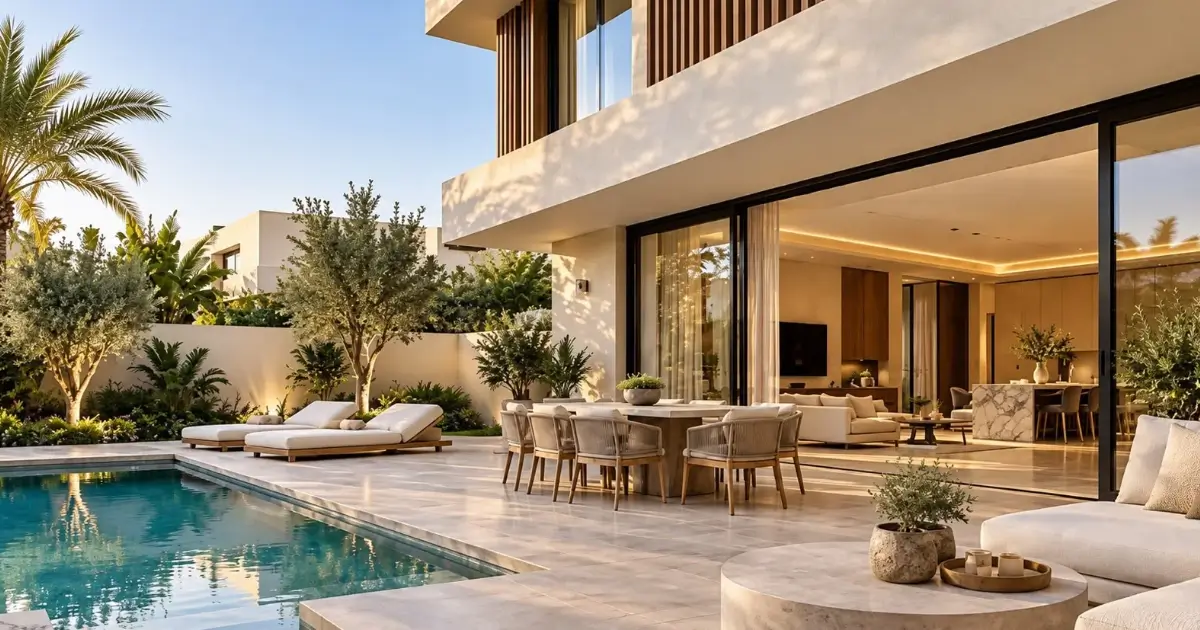
Modern villa design focuses on creating stylish, functional spaces through clean lines, open layouts, natural light, and carefully selected materials. From interior planning and exterior finishes to lighting and outdoor areas, every element works together to create a comfortable villa that reflects contemporary living and makes efficient use of space.
Key Elements of Modern Villa Design
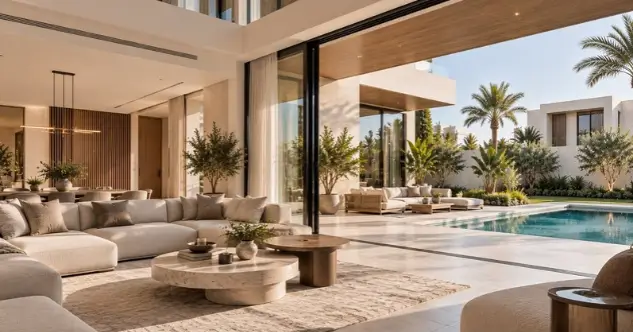
The key elements of modern villa design focus on how space, light, materials, and functionality work together to shape the overall living experience:
1- Spatial Flow and Zoning
A clear spatial flow helps connect different areas of the villa without making the layout feel crowded or fragmented. Public spaces, private rooms, and service areas should be organized in a way that supports both movement and privacy.
2- Natural Light and Large Openings
Large windows, glass doors, and double-height spaces allow more daylight into the villa and make interiors feel more open. They also strengthen the visual connection between indoor spaces and gardens, terraces, or courtyards.
To maximize the benefits of natural light and openness in modern villa design, consider the following guidelines:
- Use floor-to-ceiling windows: In key living areas to enhance the sense of space.
- Position openings strategically: To optimize natural daylight throughout the day.
- Combine large openings with suitable shading: To maintain thermal comfort and privacy.
3- Clean Architectural Lines
Simple forms and balanced proportions are central to modern villa design. Instead of relying on excessive decorative details, the architecture uses clear shapes and carefully planned surfaces to create a refined appearance.
To highlight clean architectural lines effectively, the following principles apply:
- Keep façades simple and well proportioned: To achieve a cohesive and balanced aesthetic.
- Avoid unnecessary decorative elements: Focusing instead on pure architectural forms.
- Use contrasting volumes: To add visual depth and subtle interest to the building.
4- Materials for Modern Villa Design
Material selection affects both the appearance and long-term performance of a villa. Stone, wood, glass, concrete, metal, and porcelain can be combined to create contrast and texture while maintaining a cohesive contemporary style.
The most effective ways to integrate diverse materials include:
- Use natural stone: For façades, entrances, or feature walls to add elegance.
- Add wood or wood-look finishes: To introduce warmth and break up hard surfaces.
- Incorporate glass: To maintain openness and uninterrupted visual connections.
- Utilize concrete or microcement: For clean, understated, and modern surfaces.
- Introduce metal details: Through architectural screens, frames, and railings.
- Select porcelain tiles: For high-traffic indoor and outdoor areas to ensure durability.
How to Plan a Functional Modern Villa Layout
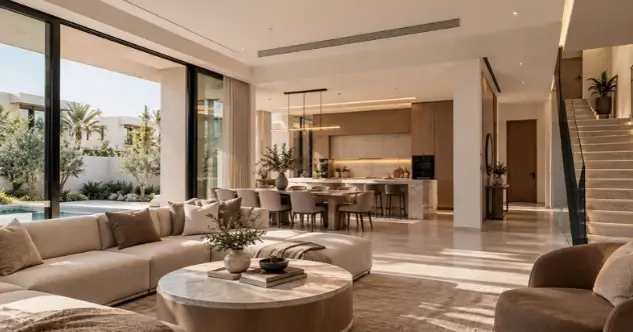
Interior planning is a key part of modern villa design because it affects room distribution, movement, and efficient use of space:
-
Arrange Rooms by Function
Living, dining, and kitchen areas should be connected, while bedrooms and private family spaces should be separated from high-traffic areas to maintain privacy.
-
Improve Circulation Between Spaces
To make movement through the villa more efficient:
- Use clear, direct paths between main rooms.
- Connect related spaces such as the kitchen and dining area.
- Avoid placing furniture or doors where they block circulation.
- Keep shared spaces easily accessible from different parts of the villa.
- Separate guest circulation from private family areas.
Provide Enough Storage
Planning built-in wardrobes, storage units, and service areas early helps reduce clutter and keep spaces organized.
-
Create Flexible Spaces
Some rooms can be designed for multiple uses, such as a home office, guest room, or study area, depending on changing needs.
Modern Villa Interior Design Ideas
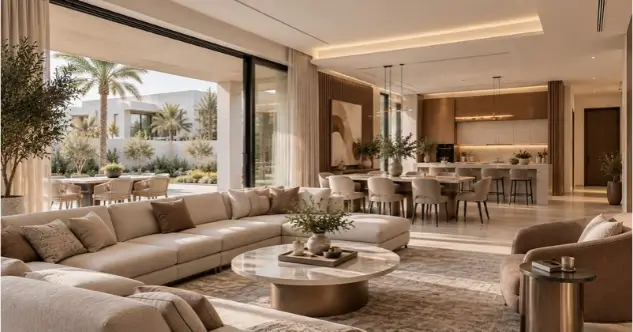
Effective modern villa interior design focuses on creating a refined, comfortable atmosphere through balanced furniture, textures, colors, lighting, and carefully planned details:
1- Use a Neutral Base with Layered Accents
Neutral shades such as beige, warm white, taupe, and soft grey create a flexible foundation for modern interiors. Depth can then be added through furniture, artwork, rugs, and decorative accessories without overwhelming the space.
2- Choose Furniture That Matches the Scale of the Villa
To maintain optimal visual balance and spatial harmony in modern villa, consider the following placement practices:
- Select statement pieces for large living areas: Choose bold, well-scaled items that fill expansive spaces without overwhelming them.
- Keep enough space between furniture for comfortable movement: Ensure clear pathways to allow uninterrupted traffic flow throughout the room.
- Avoid overcrowding rooms with unnecessary items: Focus on curated, functional furniture to maintain an open and uncluttered environment.
3- Add Texture for Visual Depth
A clean interior does not have to feel plain. Combining wood, stone, fabrics, glass, and metal can make modern villa design feel warmer and more sophisticated while preserving a contemporary look.
4- Create a Consistent Interior Style
Living rooms, bedrooms, dining areas, and transitional spaces should share a consistent design language. Colors, finishes, and furniture styles do not need to be identical, but they should feel connected throughout the villa.
For villas in the UAE, thoughtful interior design in Dubai & Abu Dhabi can also help balance contemporary aesthetics with practical choices suited to the local lifestyle and residential environment.
5- Layered Lighting for Modern Villa Interiors
To implement an effective lighting scheme, consider incorporating the following layers:
- Use ambient lighting: Provide overall, balanced illumination throughout the room.
- Add task lighting: Focus light in kitchens, reading areas, and workspaces to improve functionality.
- Use accent lighting: Highlight artwork, feature walls, or architectural details for visual interest.
- Add dimmers or smart controls: Adjust brightness easily to suit different times of day or occasions.
6- Use Statement Features Selectively
Feature walls, sculptural lighting, artwork, or custom furniture can create strong focal points when used carefully. Limiting these elements to selected areas helps maintain the clean and elegant character of a modern villa.
Modern Villa Exterior Design Ideas
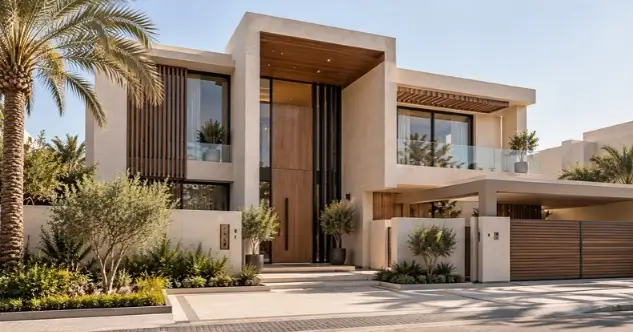
A successful modern villa exterior design combines balanced façade composition, privacy, shading, landscaping, and a well-defined entrance to create a distinctive and practical exterior:
1- Create a Balanced Façade Composition
The façade should feel visually balanced without appearing repetitive. Combining different volumes, recessed sections, balconies, and framed openings can give the exterior more depth while maintaining the clean character of modern villa design.
To achieve a well-proportioned and captivating exterior, apply the following design strategies:
- Use varied building volumes: Combine contrasting heights and depths to create visual interest and break up monotony.
- Keep windows and openings proportionate: Align all glass elements and wall openings with the overall scale of the façade.
- Avoid unnecessary decorative details: Omit superfluous ornamentation that does not serve a clear structural or aesthetic purpose.
2- Make the Entrance a Clear Focal Point
The main entrance should be easy to identify and visually connected to the rest of the façade. A larger door, framed entrance, canopy, or textured finish can define this area without making it overly decorative.
3- Integrate Shading into the Exterior Design
Shading features can improve comfort while becoming part of the villa’s architectural identity. Pergolas, overhangs, screens, and recessed openings can reduce direct sunlight and add dimension to a contemporary villa exterior.
To effectively incorporate functional shade solutions, consider the following methods:
- Use overhangs above large openings: Protect expansive glass surfaces from harsh solar heat while preserving natural daylight.
- Add architectural screens: Install decorative or slatted panels where additional shading and privacy are required.
- Design pergolas as integrated features: Treat shading structures as organic components of the main façade rather than afterthought additions.
4- Plan Landscaping Around the Architecture
Landscaping should complement the villa rather than compete with it. Trees, pathways, planting areas, and hardscape elements can frame the building and create a more cohesive exterior.
To achieve a seamless connection between nature and architecture, focus on the following guidelines:
- Keep pathways clear and connected: Align walkways directly with main entrances to ensure intuitive navigation across the property.
- Use planting to soften large architectural surfaces: Strategically place greenery to balance crisp structural lines and massive wall planes.
- Choose landscaping elements thoughtfully: Select plants and hardscapes that suit the site’s proportions and long-term maintenance requirements.
5- Balance Openness and Privacy
Modern villas often include large windows and outdoor areas, but privacy still needs to be considered. Boundary walls, screens, planting, and the positioning of openings can help protect private areas without making the exterior feel closed or heavy.
6- Conceal Service Areas
Parking, utility equipment, waste storage, and other service zones should be integrated discreetly into the overall plan. Concealing these areas helps maintain the clean appearance expected from modern villa exterior design.
Planning a complete villa transformation? G&M provides tailored interior and exterior design solutions that bring every space together.
.
Creating a Seamless Indoor-Outdoor Connection
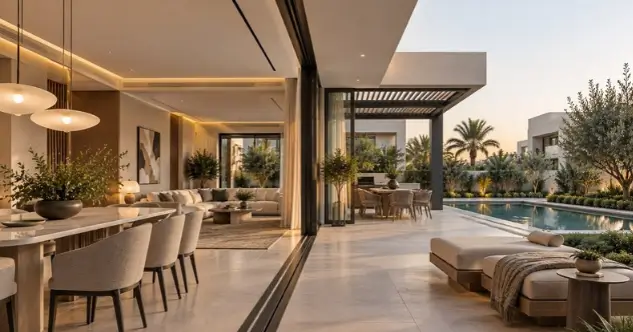
A strong indoor-outdoor connection in modern villa design helps make gardens, terraces, and pool areas feel like natural extensions of the living space rather than separate parts of the home. To create this sense of continuity:
- Provide direct access to outdoor areas: Connect living and dining spaces directly to terraces, gardens, and pool areas to improve movement and everyday use.
- Maintain design continuity: Use coordinated materials and colors across indoor and outdoor spaces to create a smooth visual transition.
- Design outdoor spaces for daily use: Add comfortable seating, dining areas, and shaded zones that suit different times of day and family needs.
- Use transitional spaces effectively: Covered terraces and pergolas can act as practical links between indoor and outdoor areas.
- Consider privacy and comfort: Use architectural screens, landscaping, and thoughtful furniture placement to maintain openness without compromising privacy.
Smart Home Features for Modern Villas
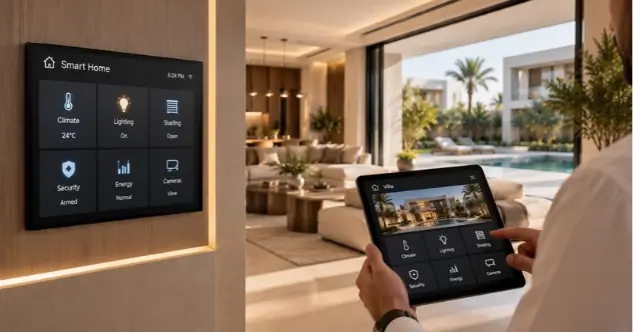
Smart systems support modern villa design by improving comfort, security, and day-to-day control. According to Deloitte’s Digital Consumer Trends 2025, 89% of consumers surveyed in the UAE and Saudi Arabia plan to purchase a connected device within the next 12 months, reflecting the growing interest in connected living and smart technology.
There are numerous methods and solutions that can be relied upon to effectively implement modern automation:
- Smart climate control: Manage temperatures by room or zone and schedule cooling based on use.
- Automated shading: Use motorized curtains or blinds to control sunlight and privacy.
- Integrated security: Connect cameras, sensors, access control, and door monitoring in one system.
- Smart energy management: Track electricity use and automate selected systems to reduce unnecessary consumption.
- Centralized home control: Manage climate, security, shading, entertainment, and selected appliances from one interface.
Common Modern Villa Design Mistakes to Avoid
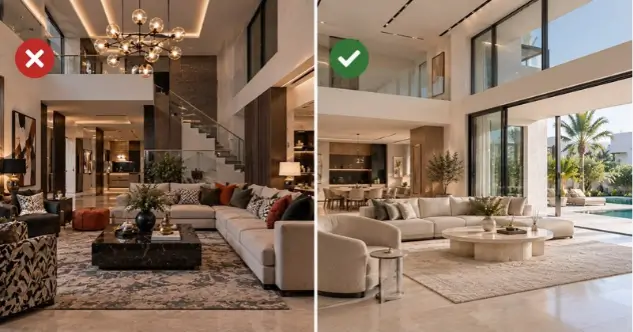
Avoiding common mistakes in modern villa design helps maintain functionality, visual balance, and long-term practicality:
- Overcomplicating the layout: Too many partitions or unnecessary circulation areas can make the villa feel less open and harder to use.
- Ignoring furniture scale: Choosing furniture that is too large or too small can affect both comfort and visual balance.
- Using too many materials: Mixing excessive finishes can make the design feel inconsistent rather than cohesive.
- Prioritizing appearance over function: Architectural or decorative features should support how the space is used, not only how it looks.
- Neglecting storage: Insufficient built-in storage can quickly create clutter in otherwise clean interiors.
- Overlooking privacy: Large windows and open spaces should be planned carefully to protect private areas.
- Adding technology too late: Smart systems are easier to integrate when considered during the early planning stages.
Why Work With a Professional Villa Design Company?
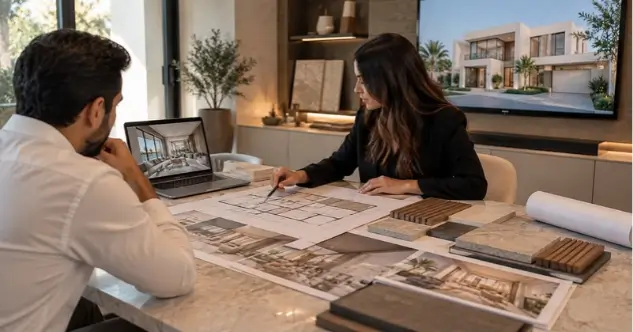
Working with a professional villa design company can make modern villa design more coordinated, practical, and easier to execute from the early planning stage through final detailing:
- Better space planning: Professionals organize rooms, circulation, and functional zones according to the villa’s needs.
- Consistent design direction: Interior, exterior, materials, and finishes can follow one clear visual concept.
- Technical coordination: Designers can coordinate architectural, lighting, and other design requirements before execution.
- Fewer design conflicts: Early planning helps reduce changes caused by mismatched layouts, finishes, or systems.
- Tailored solutions: The design can reflect the property size, lifestyle, privacy needs, and preferred aesthetic.
- More efficient decision-making: A clear design plan makes it easier to select materials, furniture, and finishes without unnecessary changes.
Create a cohesive villa from the inside out with G&M’s professional interior and exterior design services tailored to your space, style, and lifestyle!
Conclusion
A successful modern villa design balances function, comfort, and visual consistency across every part of the home. From layout and materials to interiors, exteriors, and smart features, careful planning helps create a villa that feels refined, practical, and suited to everyday living.
FAQ
What are the main features of modern villa design?
Modern villas usually focus on open layouts, natural light, clean lines, functional spaces, and a strong connection between indoor and outdoor areas.
Which materials are best for modern villas?
Stone, wood, glass, concrete, metal, and porcelain are commonly used because they combine durability with a contemporary appearance.
How can I make a modern villa more functional?
Start with clear zoning, efficient circulation, practical room connections, enough storage, and flexible spaces that can adapt over time.
Are smart home systems important in modern villas?
They are not essential, but they can improve comfort, security, energy management, and control over different home systems.