



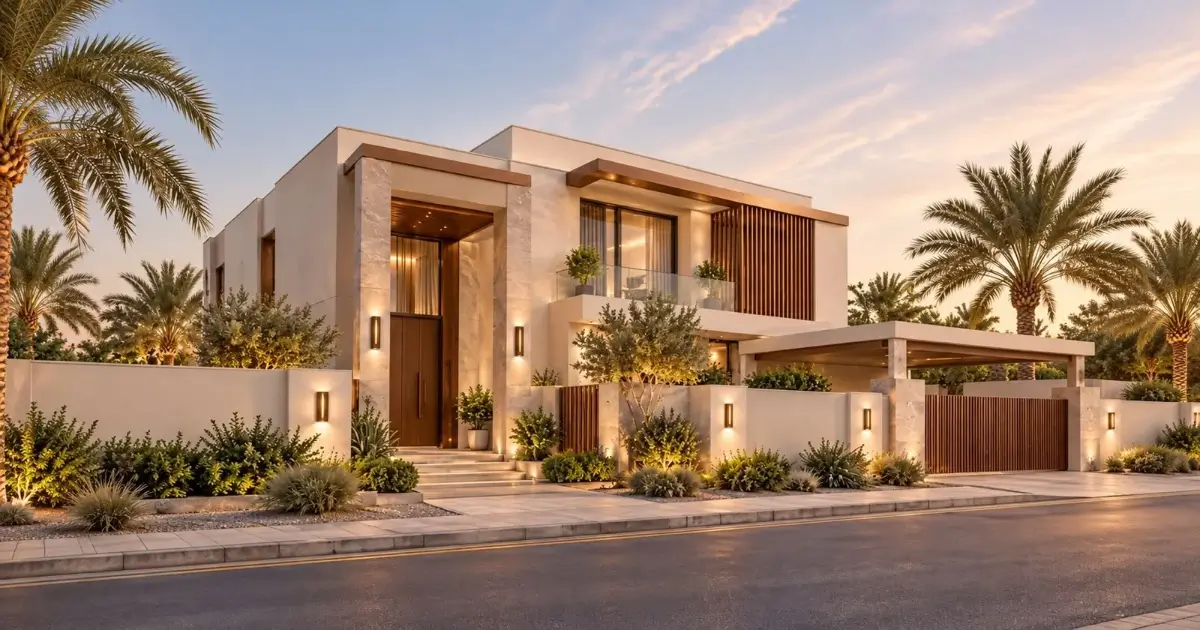
Your home’s exterior is the first thing people notice, so every detail should work together to create the right impression. A thoughtful exterior home design brings colors, materials, windows, landscaping, and lighting into one balanced look that reflects your style while remaining practical for everyday living.
In this article, we explore the main elements of exterior home design, from colors and materials to landscaping, lighting, privacy, and simple ways to improve an existing exterior.
How to Build a Cohesive Exterior Home Design
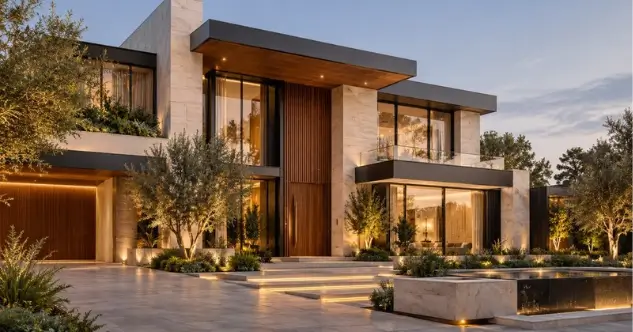
A cohesive exterior home design comes from making the façade, materials, colors, openings, and landscape feel like parts of one visual system rather than separate choices. According to the National Association of REALTORS®, 97% of real estate professionals believe curb appeal is important in attracting buyers, highlighting the impact a well-planned home exterior can have on first impressions.
To achieve that:
- Start with one clear architectural direction: Choose a consistent design language for the façade instead of mixing unrelated styles.
- Coordinate colors and materials: Use a limited palette so stone, wood, paint, metal, and glass work together without competing visually.
- Keep proportions consistent: Windows, doors, balconies, and façade features should relate to the scale of the building.
- Create one main focal point: The entrance, a framed window, or a distinctive architectural feature can anchor the exterior without making every element compete for attention.
- Connect the building with its surroundings: Landscaping, pathways, boundary walls, and outdoor features should support the architecture rather than feel added later.
Example: If a façade combines light stone, warm wood, and black metal frames, repeating those finishes in the entrance, boundary details, and landscaping elements can create a more unified exterior.
How Should You Choose Colors for Your Home Exterior?
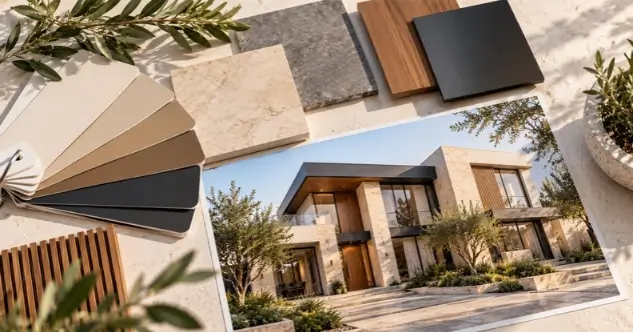
The right color palette can make an exterior home design feel more balanced and highlight the architecture without relying on excessive contrast. When choosing exterior colors:
- Start with the main façade color: Use one dominant shade across the largest surfaces to create visual consistency.
- Add one or two supporting tones: Use secondary colors for doors, trims, frames, or selected architectural details.
- Consider permanent materials: Stone, brick, roof finishes, and metal elements should influence the final palette because they are harder to change.
- Check colors in natural light: Exterior shades can look very different outdoors, so test samples at different times of the day.
- Match the palette to the architecture: Warm neutrals may suit natural materials, while sharper contrasts can work better with cleaner contemporary façades.
- Avoid too many competing colors: A limited exterior color palette usually creates a more cohesive result.
Example: A light beige façade can be paired with warm wood at the entrance and dark metal window frames to add contrast without making the exterior feel visually busy.
How Can Materials and Textures Improve the Façade?
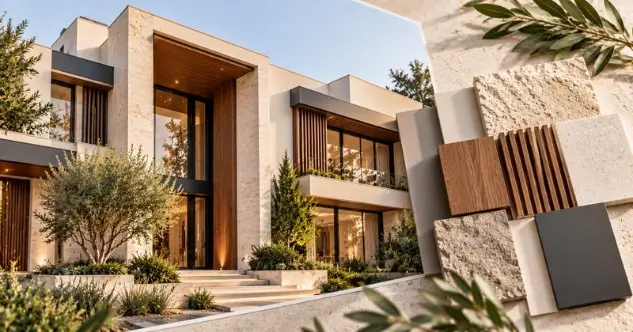
Materials and textures can add depth, contrast, and character when they are used with restraint and matched to the architecture:
- Use texture to break up large surfaces: Stone, wood, brick, or textured finishes can prevent broad façade areas from looking flat.
- Combine smooth and textured finishes: Pairing plaster or concrete with natural stone or wood creates contrast without making the exterior visually busy.
- Highlight selected architectural features: Use a different material around the entrance, balcony, or framed opening to create a clear focal point.
- Choose materials for their location: Exterior finishes should suit exposure to heat, moisture, sunlight, and regular maintenance requirements.
- Limit the number of finishes: Using a small, coordinated material palette helps the façade remain cohesive.
If you are looking for more ideas that connect the exterior with the overall style and functionality of the home, explore our guide to modern villa design ideas.
How Should Windows and Doors Work With the Exterior Design?
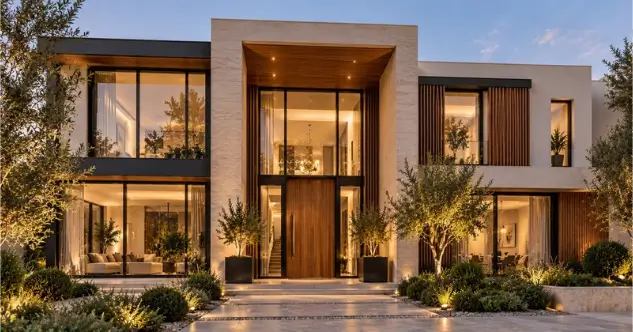
Windows and doors should support the proportions and visual rhythm of an exterior home design rather than appear as separate elements:
- Keep proportions consistent: Window and door sizes should relate to the scale of the façade and surrounding architectural features.
- Align openings carefully: Consistent horizontal or vertical alignment can make the exterior look more organized.
- Use the entrance as a focal point: The main door can stand out through size, framing, or placement without competing with other elements.
- Balance openness and privacy: Larger windows can be used in social areas, while more private spaces may require smaller or strategically positioned openings.
- Coordinate frames and finishes: Window and door frames should complement the overall exterior palette and architectural style.
How Can Landscaping Complement the Exterior Architecture?
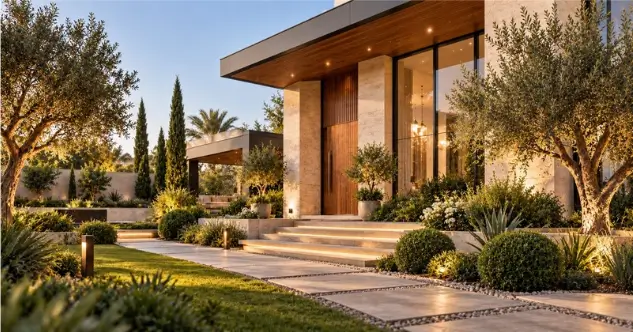
Landscaping should reinforce the exterior home design by framing the architecture, guiding movement, and softening hard surfaces without hiding key features:
- Use planting to frame the façade: Position trees and shrubs around entrances, corners, or blank walls without blocking important architectural elements.
- Match the scale of the planting to the building: Larger façades can support taller trees and stronger landscape features, while smaller homes benefit from simpler planting.
- Guide movement with pathways: Walkways should connect entrances, parking areas, and outdoor spaces clearly and directly.
- Balance hardscape and greenery: Combine paving, stone, planting beds, and lawn areas to prevent the exterior from feeling too hard or overly landscaped.
- Keep views and sightlines open: Avoid planting that blocks windows, entrances, or important views from inside the home.
- Choose plants for the local climate: Selecting suitable species can reduce maintenance and improve long-term performance.
How Should Exterior Lighting Be Planned?
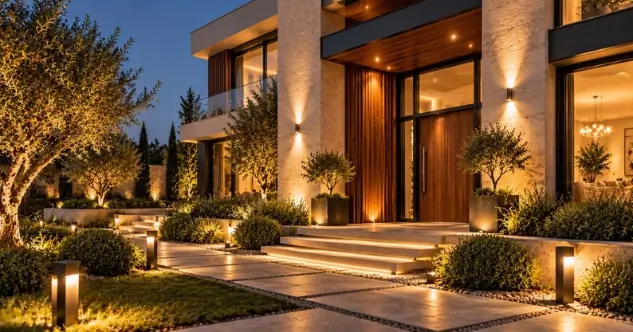
Exterior lighting should support both safety and the visual character of an exterior home design without making the façade feel overlit:
- Light entrances and pathways clearly: Ensure doors, steps, walkways, and access points are easy to see at night.
- Highlight selected architectural features: Use focused lighting on textured walls, columns, or other key details rather than illuminating the entire façade equally.
- Use different lighting levels: Combine functional lighting with softer accent lighting to create depth.
- Avoid glare: Position fixtures carefully so light does not shine directly into windows or seating areas.
- Coordinate fixture style: Choose exterior lights that complement the architecture, materials, and overall design.
- Consider energy efficiency: LED fixtures and automated controls can reduce unnecessary energy use.
How Can You Improve Privacy and Shade in Exterior Design?
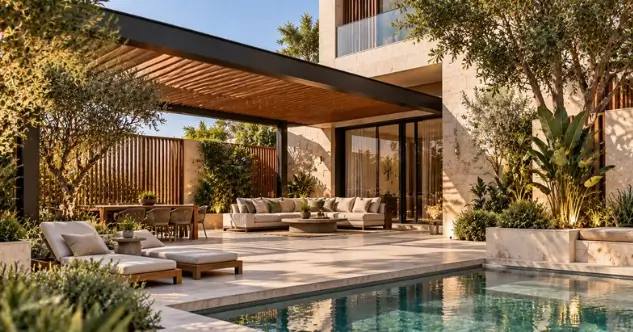
A well-planned exterior can improve privacy and provide shade while keeping the home open, comfortable, and visually balanced:
- Use architectural screens: Screens can reduce direct views while allowing light and airflow to pass through.
- Add pergolas and overhangs: These elements help shade entrances, terraces, and large glazed areas from direct sunlight.
- Position boundary walls carefully: Wall height and placement should protect private areas without overwhelming the façade.
- Use landscaping for screening: Trees and dense planting can provide privacy while softening hard architectural surfaces.
- Plan openings strategically: Window and door placement can limit unwanted views into private spaces.
- Create shaded outdoor zones: Seating and dining areas should be positioned where they can remain comfortable during hotter parts of the day.
How Can You Update an Existing Home Exterior?
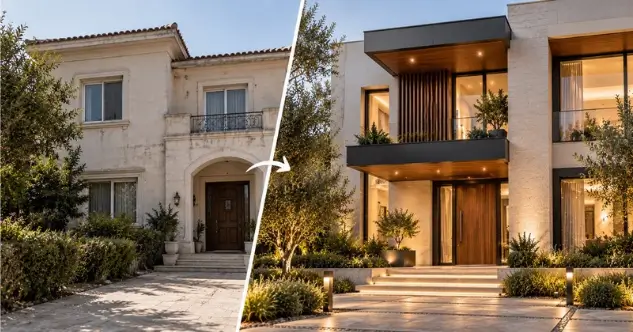
Updating an existing exterior home design does not always require a complete redesign. Targeted changes can improve the appearance, function, and consistency of the exterior:
- Refresh the color palette: Repainting the façade can create a cleaner and more coordinated look.
- Replace dated finishes: Update worn or outdated cladding, trims, or decorative elements with simpler materials.
- Improve the entrance: A new door, canopy, or entrance framing can strengthen the overall appearance.
- Upgrade windows and frames: Replacing old frames or adjusting finishes can make the façade look more consistent.
- Improve exterior lighting: Better placement and updated fixtures can enhance both visibility and architectural details.
- Refine the landscaping: Removing overgrown planting and reorganizing pathways can make the architecture more visible.
- Remove unnecessary details: Simplifying excessive decorative elements can give the exterior a cleaner and more cohesive appearance.
For a broader look at planning, design considerations, and renovation strategies, explore our complete guide to exterior design and home renovation in the UAE.
How Can G&M’s Professional Designers Improve Your Home Exterior?
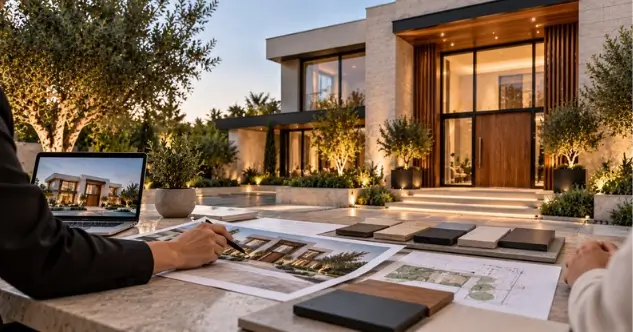
G&M’s professional designers help you create an integrated interior and exterior design that brings every part of your home together in one cohesive and practical vision. This is reflected in several key areas, including:
- Creates a clear design direction for the façade.
- Coordinates colors, materials, lighting, and landscaping.
- Improves proportions, circulation, and privacy.
- Reduces design conflicts before execution.
G&M provides tailored interior and exterior design solutions that bring every part of the home together in one cohesive vision.
Conclusion
A successful exterior home design depends on how well colors, materials, openings, landscaping, lighting, and privacy solutions work together. Careful planning helps create an exterior that looks cohesive, functions well, and remains practical over time.
FAQ
What should be considered first when planning a home exterior?
Start with the architectural style, façade proportions, climate, privacy needs, and the materials already used on the property.
How many exterior materials should be used?
A limited material palette usually works best. Two or three coordinated finishes are often enough to create contrast without making the façade look busy.
How can exterior design improve privacy?
Privacy can be improved through screens, landscaping, boundary walls, strategic window placement, and shaded outdoor areas.
Can an existing exterior be improved without a full redesign?
Yes. Updating colors, finishes, lighting, landscaping, and selected architectural details can significantly improve the exterior without changing the entire structure.